
What are white scale insects on plants?
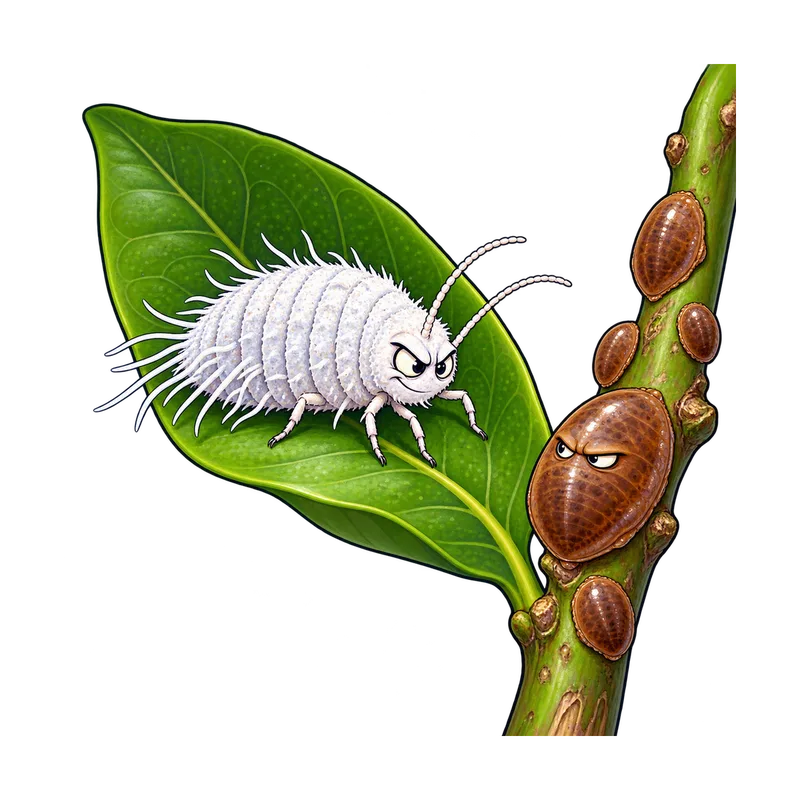
White scale insects are tiny, sap-sucking bugs disguised as crusty, chalky plant blemishes. They sink needle-like mouthparts into plant tissue, slurping up sap and weakening shrubs or trees. Managing these pests depends on catching them during their vulnerable crawler stage after the eggs hatch.
What is actually going on
You walk out to check on the peach tree in the backyard, or perhaps the privacy hedge by the fence, and notice the twigs look like someone splashed white paint unevenly across the bark. You reach out to rub it off, and it feels crusty, almost mineral. That powdery or chalky buildup is not a weird fungal disease or leftover residue from winter spraying. You are looking at white scale insects, which are actually tiny, sap-sucking bugs disguised as plant blemishes.
These pests belong to a large group of insects that also includes aphids and whiteflies. When people talk about white scale insects, they are usually lumping a few different biological groups together. Some are armored scales, which construct a hard, rigid waxy cover that sits over their bodies like a tiny, independent roof. Others are soft scales and mealybugs, which secrete a cottony, powdery wax that is part of their own physical structure.
What brings them all together is their menu. They sink needle-like mouthparts into the plant tissue, slurping up sap and cell contents. Left unchecked, this constant draining saps the plant's vigor, turning leaves yellow, causing branches to die back, and occasionally killing young shrubs or trees within a few years. Yet because they spend most of their lives sitting completely still under their waxy shields, many gardeners mistake them for inanimate parts of the plant until the damage becomes obvious.
How to tell for sure
Telling these pests apart from other garden oddities usually requires a magnifying lens and a bit of patience. If you look closely at the white encrustations on a branch, you want to test whether they are alive. Gently lifting the waxy cover or crushing a specimen will usually reveal liquid body fluids if the pest is active.
One of the most reliable ways to narrow down the specific type is to check for sticky residue. Soft scales and mealybugs excrete a liquid waste called honeydew, which coats the foliage below and quickly turns into a sticky mess that attracts black sooty mold and protective ants. Armored scales, such as the white peach scale that makes twigs look whitewashed, do not produce honeydew. Instead, their feeding causes localized cell damage and discolored halos on fruit or bark.
You also want to rule out common lookalikes that share a chalky appearance. Powdery mildew creates a flat, dusty fungal coating that rubs off easily on your fingers, unlike the distinct waxy bumps of scale insects. Whitefly nymphs and woolly adelgids on conifers also produce fluffy white masses, but they tend to flutter away as adults or inhabit specific host trees like hemlocks and pines. Spotting tiny, mobile creatures wandering along the bark during their crawler stage is usually the definitive clue that you are dealing with true scales.
What usually comes next
Once you confirm your plant is hosting an active population of white scales, you have to decide whether to target the moving generation or wait for the dormant season. The most crucial detail in managing these insects is the crawler stage, which is the brief, open window right after the eggs hatch when the tiny nymphs crawl around looking for a feeding spot. During this stage, they lack a thick protective armor, making them vulnerable. If you miss that window and the crawlers settle down and build their waxy shields, spraying them with contact remedies is usually a waste of time because the wax simply repels the moisture.
Your practical decision comes down to timing and the condition of the plant. If it is late winter or early spring before new growth starts, applying horticultural dormant oils can smother overwintering nymphs and eggs on the bark. If you are in the middle of spring or summer, you have to watch local crawler emergence dates to catch them unprotected. Trying to blast mature armored scales with water or soap once they are locked into their permanent homes rarely works, meaning patience and accurate timing matter far more than rushing out to grab the strongest spray on the shelf.
When to get help
There are times when a garden pest problem moves past a weekend DIY project and requires outside assistance. If you are dealing with large, mature shade trees heavily infested with scale, climbing a ladder with a hand sprayer is neither safe nor effective. Treating big trees usually demands specialized high-pressure hydraulic equipment, which means you should call a licensed commercial arborist or professional tree care service.
You also need to loop in official channels if you suspect a regulated biosecurity threat. Finding unusual, heavily encrusted scale insects or mealybugs on imported nursery stock, commercial agricultural shipments, or regulated fruit must be reported immediately to state or national plant health authorities, such as the state department of agriculture or federal plant health agencies. These regulatory bodies track invasive species to prevent widespread agricultural damage.
On the safety front, whenever you handle horticultural oils, soaps, or systemic treatments, read the product label carefully and wear the required personal protective equipment. Pesticide applicators hold full legal responsibility for ensuring the target site and pest are listed on the label. If you ever experience unusual physical symptoms, dizziness, or skin irritation after handling garden chemicals, contact a clinician or your local poison control center right away.