
What are fuzzy white bugs on plants?
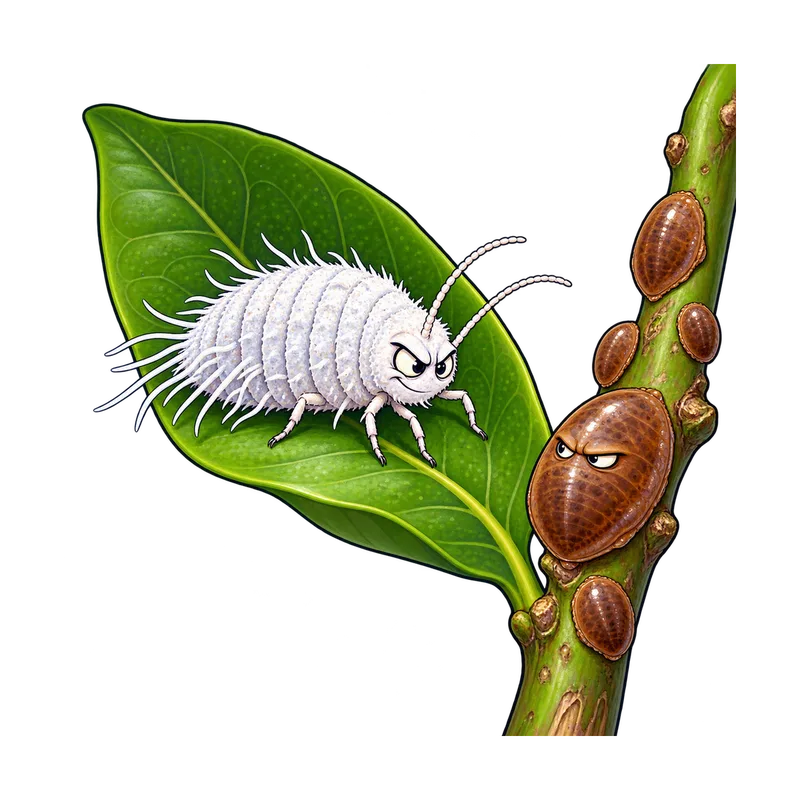
Fuzzy white bugs on plants are usually sap-sucking insects or fungal diseases that use waxy secretions, cottony egg sacs, or fungal mats to shield themselves. Depending on the specific invader, you might be looking at mealybugs, woolly aphids, whiteflies, or powdery mildew. A positive identification depends on whether the white material smears like flour or if touching it reveals living creatures.
What is actually going on
You are standing over your prized hibiscus or a struggling patio fern, and you notice what looks like tiny tufts of cotton or a dusting of powdered sugar tucked into the leaf joints. It is natural to worry that your plant is under siege, and quite frankly, it usually is. That fuzzy white appearance is rarely a single culprit. It is a broad visual description that covers several very different sap-sucking insects, microscopic mites, and even fungal diseases that use white waxy secretions, cottony egg sacs, or fungal mats to shield themselves from the elements.
Think of it as a neighborhood where different residents happen to wear the same winter coat. You might be looking at mealybugs, which are soft-bodied insects covered in a hydrophobic, powdery white wax that acts like a waterproof raincoat. Or you might have woolly aphids or adelgids clustering on the undersides of branches, spinning specialized waxy filaments that look like miniature sheep's wool. On the other hand, it could be powdery mildew, which is a living fungus that spreads like a dry dusting of flour across the foliage rather than a colony of living bugs.
The confusion usually happens because these organisms all solve the problem of survival in the same visual way. They either exude wax to keep from drying out or they grow threads of mycelium to feed. Before you grab a spray bottle from the shed, you have to figure out whether you are dealing with a living creature drinking the plant sap or a fungal pathogen spreading across the surface. If you spray a fungicide on an insect protected by a thick waxy coat, you are essentially throwing water at a duck. The spray beads up and rolls off completely, leaving the pest entirely undisturbed.
How to tell for sure
Identification always comes before control. You can usually separate these invaders by looking closely at where they sit on the plant and how they react when you touch them. Grab a 10x magnification hand lens if you have one, or just take a close look in bright daylight.
If you rub the white material with your fingertip and it smears like dry flour or talcum powder across the leaf, you are usually looking at powdery mildew. This fungal disease forms flat, circular patches or broad mats that prefer shady, humid spots.
If the white spots are raised, fluffy little bundles that stay stuck in the crevices where leaves meet the stems, and they ooze a yellowish or reddish fluid when you crush them, you have likely found mealybugs. They crawl very slowly, though most of the time they just sit tight and drink.
If you tap the plant and a small cloud of tiny, moth-like white insects erupts into the air like a miniature snowstorm before settling back down on the foliage, those are whiteflies. Meanwhile, if you spot a white, frothy blob that looks like a patch of soapy spit clinging to a strawberry crown or a lawn stem, peel back the bubbles with a toothpick. You will usually find a pale green nymph hiding inside its own personal moisture shield, known as a spittlebug.
On woody trees like hemlocks or pines, dense cottony tufts tightly lined up on the undersides of needles or along bark cracks usually point to adelgids or woolly aphids. If the white bumps are hard, immovable, and look like tiny crusts or scales glued to the bark, you are dealing with scale insects. They secrete a hard or waxy armor that protects them through the winter.
What usually comes next
Once you know what you are looking at, your next practical decision is how to handle the cleanup without damaging the plant further. For small, isolated colonies of mealybugs or soft scales on an indoor houseplant, you can often skip chemical treatments entirely. Dip a cotton swab in 70% isopropyl rubbing alcohol and dab the individual pests directly. The alcohol breaks down their protective waxy coating on contact.
For larger infestations on outdoor shrubs, a strong jet of water from the garden hose can physically dislodge whiteflies, spittlebug froth, and mobile crawlers. If the population is heavier, you will generally need to reach for an insecticidal soap containing potassium salts of fatty acids or a horticultural oil spray. These products work by smothering the insects or dissolving their waxy armor, but timing matters immensely. Horticultural oils must never be applied when outdoor temperatures climb above 90 degrees Fahrenheit, or you risk frying the foliage in the sun. Similarly, avoid spraying them if freezing temperatures are expected within a day.
If you are dealing with food crops like tomatoes or strawberries, check the pre-harvest interval on any product label before you spray, which tells you how many days must pass between treatment and eating. Above all, resist the urge to feed struggling plants with high-nitrogen fertilizers right now. Extra nitrogen triggers a flush of soft, tender new growth that acts like an open buffet for sap-sucking pests, accelerating their reproduction when the plant is already down.
When to get help
Certain situations require stepping back and letting trained professionals or local authorities take over. If you suspect an infestation of a regulated quarantine pest, such as the Hemlock Woolly Adelgid in newly affected forest zones or the Pine Processionary Moth, do not attempt to treat it yourself. Government departments and agricultural agencies track these invasive species closely to prevent widespread ecological damage, and they often require formal reporting rather than a DIY spray program.
You should also involve a certified arborist if you are facing severe defoliation, branch dieback, or structural tree failure on large landscape trees. Heavy infestations can weaken mature trees to the point where they pose falling hazards over a driveway or a roof, which requires specialized equipment and removal techniques.
As for the Pine Processionary Moth or similar hairy caterpillars that spin large silken nests in trees, keep your distance entirely. These caterpillars carry millions of microscopic, barbed hairs filled with toxic proteins that cause severe skin rashes, eye irritation, and respiratory distress in people and pets. Let licensed pest control operators handle the eradication of stinging or medically hazardous pests. For any human or pet exposure involving severe allergic reactions, animal bites, or accidental pesticide ingestion, contact a qualified clinician, an emergency medical facility, or your regional poison control center without delay.