
What should you inspect when mealybugs return after treatment?
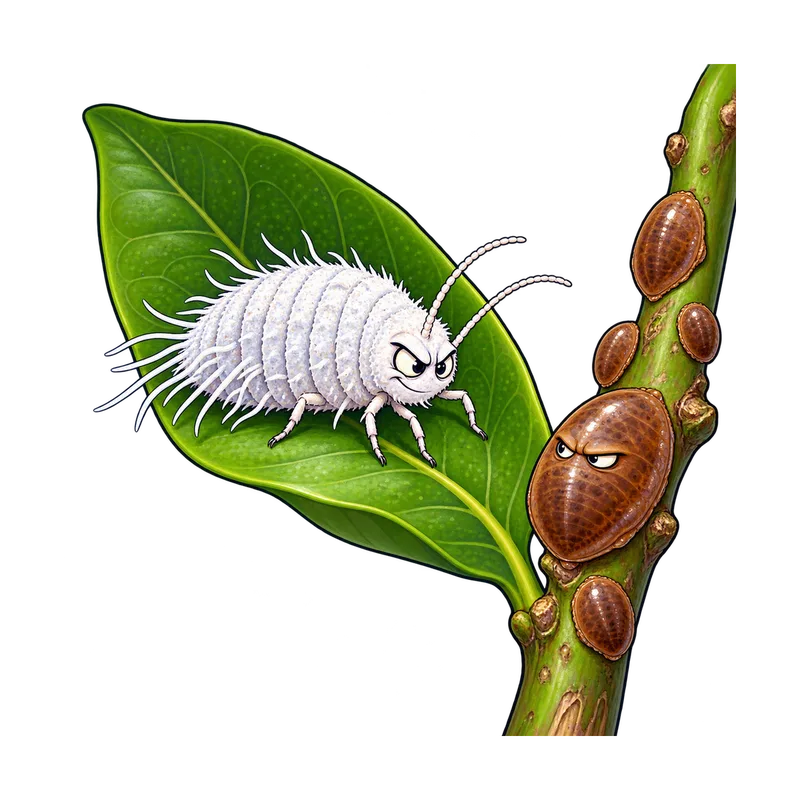
When mealybugs return after treatment, you should inspect tight microhabitats like leaf axils, petiole sockets, stem sheath bases, root crowns, and container rims. You also need to check nearby plants, drainage saucers, and pot rims because tiny mobile crawlers can easily travel across a shelf or ride indoor air currents to reinfest the foliage.
What is actually going on
Picture this: you spent your entire Sunday afternoon wiping down your favorite parlor palm, meticulously dabbing every little white speck with a cotton swab soaked in rubbing alcohol. You admired your handiwork, placed the plant back on the windowsill, and patted yourself on the back for a job well done. Two weeks later, you walk past the plant and notice a fresh dusting of cottony fuzz tucked into the leaf joints. It feels like the pests materialized out of thin air, but what is actually going on is a masterclass in biological stubbornness. Those bugs did not necessarily come back from the dead, and you did not necessarily fail at cleaning. More likely, you missed an invisible nursery tucked away in the plant architecture, or an unhatched egg sac simply finished incubating right on schedule.
Mealybugs are remarkably good at surviving human intervention because they build themselves waterproof fortresses. Adult females and their cottony egg masses are coated in a thick, hydrophobic wax that repels water-based sprays and casual washing. When you spray a liquid treatment over a plant, the droplets often bead up and roll right off the waxy shell like rain on a fresh coat of car wax. Worse yet, a single female can pack hundreds of eggs into a dense sac that completely shields the next generation from surface-level sprays. Once those eggs hatch, tiny nymphs called crawlers emerge, ready to start the cycle all over again.
Another reason pests reappear is that a plant is rarely isolated in a vacuum. Crawlers are tiny, mobile, and capable of walking several feet across a shelf or riding an indoor air current straight back to the foliage you just cleaned. If you only treat the main plant and ignore the pot rim, the drainage saucer, or the neighboring philodendron sitting three inches away, the infestation is bound to bounce right back. Understanding that a single treatment is rarely a silver bullet changes how you approach the problem. It is not about one massive clean-up day, but rather about interrupting a multi-stage life cycle.
How to tell for sure
Before you grab a bottle of spray, you need to know what you are looking at and where to find it. Mealybugs usually avoid flat, open leaf surfaces where they are exposed to light and airflow. Instead, they wedge themselves into tight, dark microhabitats such as leaf axils, petiole sockets, stem sheath bases, root crowns, and container rims. If you want to spot them before they take over the entire pot, you usually need a ten-to-twenty-power hand lens and a bright flashlight. Without magnification, first-instar crawlers look like pale specks of dust or grains of salt, making them nearly invisible to the naked eye against green foliage.
You should also check whether you are dealing with active mealybugs or the lingering empty husks and sticky honeydew left behind from an older generation. A magnifying loupe will usually show you whether those white specks have legs and are actively wandering toward a new feeding site, or if they are just lifeless debris. Do not rely on a quick glance at the top leaves. Turn the plant upside down, inspect the underside of every branch fork, and peek beneath the rim of the nursery pot where the soil meets the plastic. If you see sticky, clear droplets on the furniture below the plant, that is honeydew, which is usually the first real clue that sap-sucking pests are hiding higher up in the canopy.
What usually comes next
Once you confirm the pests are back, you have to make a practical decision about how aggressively to treat the plant without damaging it. If the infestation is light and localized, mechanical spot cleaning remains your best friend. Grab a cotton swab dipped in seventy percent rubbing alcohol and dab individual bugs and egg sacs directly, followed by a gentle rinse under tepid water to wash away lingering residue. For more stubborn or widespread recurrences, you will need to apply a contact smothering agent like horticultural oil or insecticidal soap, making sure to coat every hidden crevice where a crawler might be hiding.
The most common trap is stopping after a single application because the plant looks clean. Because contact sprays rarely penetrate dense egg sacs or kill every hidden stage, you usually need to repeat your treatments two to four times, spaced seven to ten days apart, to catch newly hatched crawlers before they mature and lay more eggs. At the same time, keep a close eye on plant sensitivity. Certain plants, including jade plants, ferns, begonias, and many common houseplants, can suffer severe leaf burn or drop their leaves entirely if you spray them with heavy oils or harsh chemicals, especially if ambient temperatures climb too high. If a plant is sensitive, stick to manual alcohol dabbing and mild insecticidal soaps rather than heavy-duty sprays.
When to get help
There comes a point when a houseplant stops being a fun hobby and starts becoming an unmanageable chore. If a prized specimen plant exhibits complete canopy dieback despite three or more rounds of careful treatment, or if the infestation has migrated deep into the root crown below the soil line where foliar sprays cannot reach, it is time to step back. Root mealybugs require specialized handling, such as bare-root washing and repotting in completely sterilized media, which can shock an already weakened plant.
For commercial greenhouse operations or large indoor collections where persistent outbreaks point toward chemical resistance, consulting a local agricultural extension service or a professional plant health specialist is the most sensible path forward. They can help verify the exact species and recommend targeted management strategies that go beyond standard home remedies. Always wear protective gloves when handling concentrated horticultural sprays or rubbing alcohol, and work in a well-ventilated space to avoid breathing in fumes. If accidental chemical exposure occurs, or if you experience unexpected health symptoms or skin irritation, reach out to a medical clinician or your local poison control center right away.