
How do you get rid of mealybugs on plants?
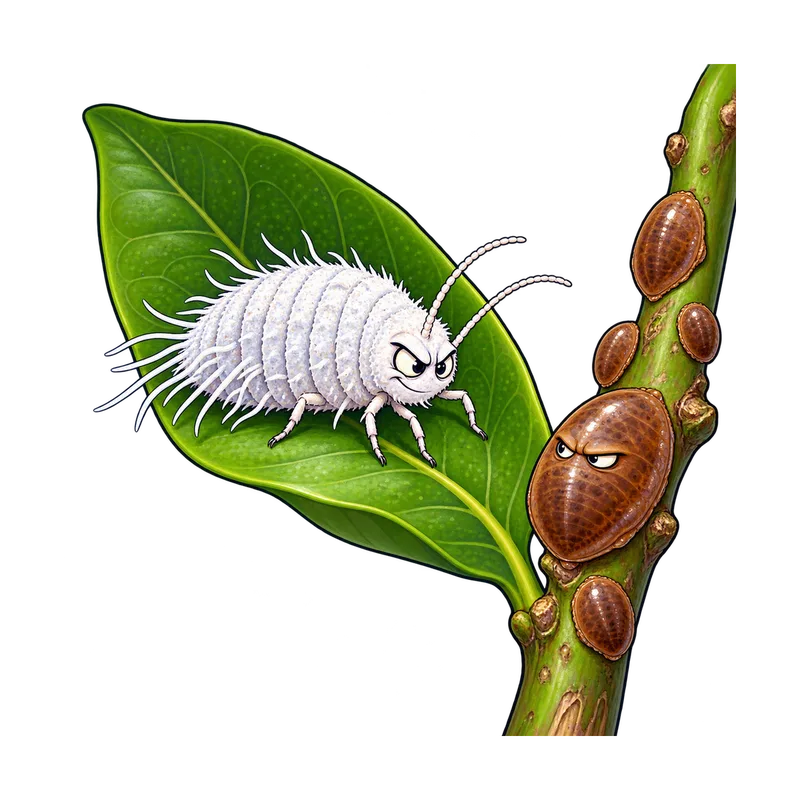
Getting rid of mealybugs on plants requires a complete approach because their waxy coating makes ordinary water roll right off them. Start by isolating the infested pot, then remove visible bugs using a cotton swab dipped in 70 percent rubbing alcohol or wash the foliage with insecticidal soap. Finish by following up with two to four contact sprays spaced 7 to 10 days apart to catch newly emerged crawlers.
What is actually going on
You notice a fuzzy white smudge nestled right in the crotch where a leaf meets the stem of your favorite parlor palm. You lean in closer, thinking it is just a bit of dried dust or spilled mineral deposit from your last watering, but then you touch it and it smears. Suddenly, you spot three more clinging to the underside of the next leaf down, and the top of the soil looks like someone dropped a tiny piece of cotton candy. That is how most people discover they have mealybugs, and the immediate panic usually involves wondering how an indoor plant sitting quietly on a living room bookshelf managed to get invaded by miniature arctic creatures.
Getting rid of mealybugs is not about finding one magic spray that wipes them out in a single afternoon. Because these soft-bodied little sap-suckers secrete a thick, hydrophobic waxy coating that acts just like an oilskin raincoat, ordinary water droplets or light rinses simply roll right off them. They feed by plunging tiny piercing mouthparts straight into the vascular tissue of your plant, draining the vital fluids while excreting a sticky, sugary waste known as honeydew. That sticky mess soon attracts black sooty mold, turning your once-thriving greenery into a sticky, speckled hazard.
To break the cycle, you have to tackle them through an integrated approach that usually starts with immediate physical isolation and targeted mechanical removal, followed by repeated contact treatments. A single treatment almost never works because mealybugs live in overlapping generations. While you might kill the adults visible on the surface, microscopic eggs hidden deep within protective ovisacs or newly hatched crawlers will emerge a week later to start the whole cycle over again.
How to tell for sure
Before you start splashing liquids on your greenery, you need to confirm what you are dealing with, usually by grabbing a 10x hand lens or a jeweler's loupe to inspect the plant up close. Mealybugs typically appear as small, oval, soft-bodied insects ranging from white to pinkish-yellow, completely blanketed in powdery white wax or surrounded by cottony filaments. You will usually find them clustered tightly in sheltered spots like leaf axils, petiole bases, stem joints, and sometimes even down around the root crown if the infestation has raged underground for a while.
You might wonder why you cannot just diagnose them by the white residue alone, since powdery mildew and woolly aphids can look deceptively similar from a distance. Powdery mildew forms a flat, dusty coating across flat leaf surfaces rather than concentrated cottony tufts, and aphids tend to cluster in more active, pear-shaped colonies that twitch when disturbed. Mealybugs move very sluggishly, if at all, once they settle down to feed, and poking one usually reveals a soft, plump body rather than a hard shell like a scale insect.
What usually comes next
Your very first move should be absolute isolation, meaning you pick up the infested pot right now and carry it far away from any other houseplants before those tiny crawlers decide to march across the shelf. Once the plant is quarantined, you have to decide how heavy the infestation is. For a light or localized buildup, you can skip chemical sprays entirely and take a cotton swab dipped in 70% rubbing alcohol, dabbing it directly onto each visible bug to dissolve their waxy shield and instantly dry them out.
If the infestation covers multiple stems and leaves, give the plant a thorough washing in the sink or shower using a gentle spray of tepid water and a small splash of commercial insecticidal soap to break the surface tension. For severe cases involving heavy leaf drop, stem dieback, or roots choked with bugs, your best bet is usually pruning away the worst damage or repotting the entire root system into fresh, sterile soil media. Whichever mechanical route you choose, follow up with two to four contact sprays of insecticidal soap, horticultural oil, or neem oil spaced 7 to 10 days apart to catch any newly emerged crawlers before they can build their own protective coats.
When to get help
There are moments when a houseplant pest crosses the line from a fun indoor gardening project into a situation that requires stepping back and bringing in outside resources. If you are dealing with a massive commercial greenhouse, an extensive indoor conservatory, or widespread turfgrass infestations across a large lawn, a licensed pesticide applicator should evaluate the site and handle the treatment using proper commercial equipment and safety protocols.
Safety restrictions also apply heavily around the home. Never apply harsh synthetic chemicals or broad-spectrum insecticides to outdoor flowering plants when bees and other pollinators are actively foraging, and always read product labels carefully since active ingredients like malathion or carbaryl can cause severe leaf burn and phytotoxicity on sensitive houseplants like ferns, ivies, and certain succulents. If you ever use natural products like diatomaceous earth, stick strictly to food-grade amorphous dust and wear a proper mask, as inhaling fine mineral dust poses a real respiratory hazard. When in doubt about legal application rates, pre-harvest intervals for edible crops, or severe chemical exposure, consult your local university extension service or poison control center immediately.