
What are scale insects on plants?
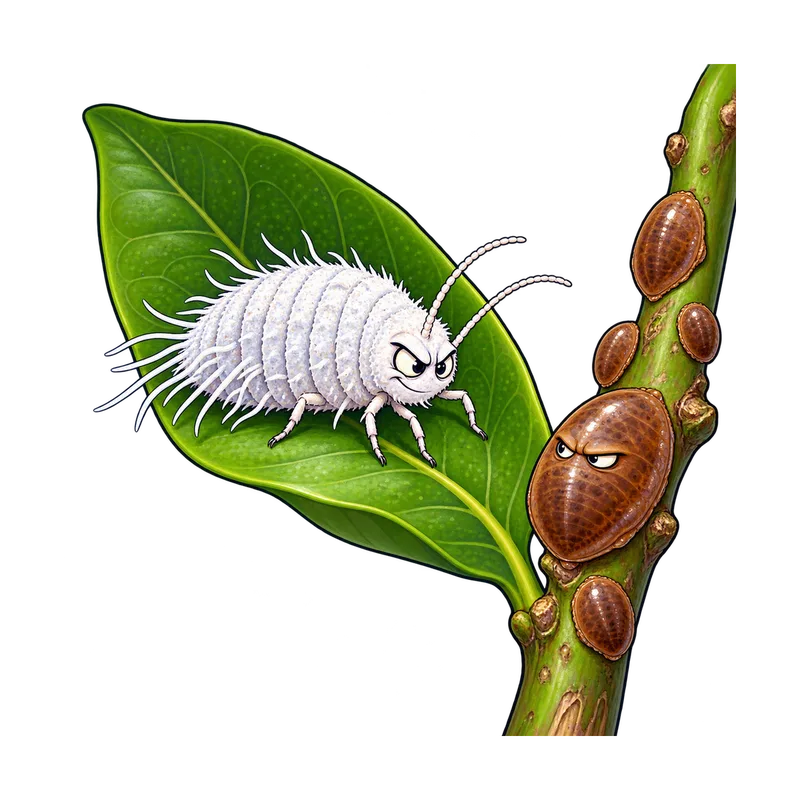
Scale insects are small, sap-feeding true bugs that look like strange, bumpy crusts or raised brown spots on plant stems and leaves. Adult females stay glued to a single spot for life and cover themselves with protective waxy shields.
What is actually going on
You walk out to water your prized potted monstera or check on the peach tree in the backyard, and something looks off. There are strange, bumpy crusts along the stems, or tiny raised brown spots stuck firmly to the underside of the leaves that will not brush away. You try to flick one off with a fingernail, and it feels like a tiny, glued-down helmet rather than a living bug. What you are looking at is likely an infestation of scale insects, which are small, sap-feeding true bugs.
Instead of moving around like aphids or beetles, adult female scale insects hunker down on a single spot of a plant for their entire lives. They insert thread-like mouthparts directly into the plant tissues to drink the sugary sap flowing through the veins. As they feed, they cover themselves with protective waxy shields or secretions. Because these shells shield their bodies from environmental stress, heavy rain, and contact sprays, most people do not realize they have a living pest on their hands until the plant starts looking sickly, dropping leaves, or growing a layer of black, soot-like film.
You might wonder how these stationary little bumps ever manage to spread to other plants if the adults never crawl away. The secret lies in their lifecycle. When scale insects reproduce, they hatch into tiny, active first-instar nymphs known as crawlers. These microscopic babies have functional legs and antennae, giving them a brief window to wander across the plant or catch a ride on a passing breeze before they settle down, sink their mouthparts into the bark or leaves, and build their own permanent armor.
How to tell for sure
Telling scale insects apart from normal plant bumps or other pests usually comes down to structural details, and you can usually sort them into two main camps: armored scales and soft scales. Armored scales construct a hard waxy shell that is completely separate from the actual body underneath, much like a tiny barnacle clinging to a rock. If you manage to pop the shell off an armored scale, you will find the soft-bodied insect sitting underneath, while the shell stays behind.
Soft scales, on the other hand, do not have a separate cover. Their protective waxy layer is part of their own body wall, creating a raised, smooth, or cottony dome that stays attached. If you have soft-bodied scales, you will usually notice another major clue: sticky honeydew. Soft scales drink massive amounts of plant sap and excrete the excess sugar as a clear, sticky liquid that drips onto lower leaves and nearby furniture or patios. Saprophytic fungi love this sticky residue, growing rapidly into a black layer of sooty mold that blocks sunlight from reaching the leaves.
You will also want to watch out for ants if you suspect soft scales. Foraging ants regularly guard honeydew-producing scale colonies from natural predators like ladybird beetles and parasitic wasps, treating the pests like livestock in exchange for sugary excrement. If you see a steady line of ants marching up and down a woody stem that has no aphids, look closer for soft scales. On turfgrass, specialized scales like the Rhodesgrass scale produce white, waxy masses at the crowns and nodes that visually resemble stray grains of white lawn fertilizer until you look at them with a hand lens.
What usually comes next
When you finally realize you are dealing with scale insects, the next step depends entirely on whether the problem is sitting on your favorite houseplant in the living room or stretching across a shade tree in the yard. For a modest indoor houseplant, you can skip the garden center aisle and chemical bottles altogether. Grab a cotton swab dipped in rubbing alcohol or mild soapy water and wipe the scales directly off the stems and leaf joints. Scrubbing them with a soft cloth or a mesh sponge breaks their grip, and keeping the plant isolated for a month makes sure any missed strays do not wander over to your other greenery.
Outdoor trees and heavy landscape infestations require a completely different approach because spraying a fully grown adult scale with a contact pesticide is mostly a waste of time. That adult shell acts like a stone fortress wall, and liquid sprays just slide right off it. You have to time your treatments to catch the crawler stage when those tiny nymphs hatch and wander out into the open before they build their armor. Horticultural oils and insecticidal soaps work by smothering or disrupting the bodies of these soft-bodied crawlers, but you need to apply them right when local scouting indicates the crawlers are actually moving around.
Before you grab a bottle of horticultural oil from the shelf, check the thermometer and the plant species you are treating. Applying oils when temperatures climb past ninety degrees Fahrenheit, or using them on oil-sensitive plants like Japanese maples or spruces, causes severe leaf scorch and foliage damage. Read the product label carefully to make sure the oil matches the season, using heavier dormant oils in late winter on deciduous trees and lighter summer oils during the active growing months.
When to get help
While most indoor scale issues clear up with persistent wiping and pruning, certain situations call for professional intervention. Heavy populations of armored scales can girdle branches and kill mature limbs or entire young trees within a couple of years if nobody manages them. If you manage a large shade tree, a dense orchard, or extensive landscape shrubs that need full-canopy high-pressure sprays or specialized systemic trunk injections, contact a licensed commercial arborist or a certified custom applicator who has the right safety gear and training for commercial-grade treatments.
You should also consult local agricultural extension agents or plant health authorities if you suspect a regulated quarantine pest on agricultural stock or imported plant material. On the health front, if you or anyone in your household experiences severe allergic reactions, respiratory distress from pesticide exposure, or contact irritation from handling concentrated horticultural chemicals or soaps, seek medical attention immediately. Always keep product labels handy for poison control or your clinician, and follow all safety advisories regarding pollinators when applying systemic products to flowering plants.