
What eats mealybugs?
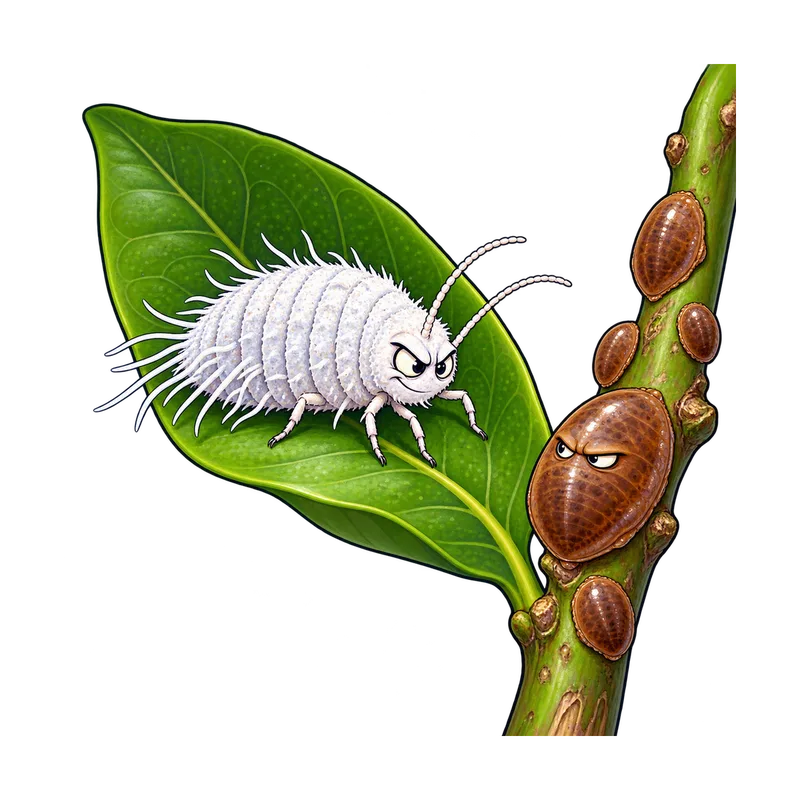
Mealybugs are eaten by specialized predatory insects, including mealybug destroyers, green lacewing larvae, brown lacewing larvae, hoverfly maggots, and opportunistic spiders. A naturally occurring insect parasitic fungus also consumes them from the inside out within a few days. Success depends on dealing with ants first, because the ants guard the colonies and chase away hungry beneficial insects.
What is actually going on
You are out on the porch watering your prize hibiscus, and you spot what looks like a tiny speck of white cotton tucked neatly into a stem joint. You lean in closer to investigate, only to find a sticky, shiny mess on the leaves below and a steady stream of ants marching up and down the plant like they own the place. You are looking at a mealybug infestation, and if you are wondering what on earth actually eats these cottony little sap-suckers, the short answer is a specialized lineup of predatory insects and fungal pathogens that treat your houseplants and garden beds like an all-you-can-eat buffet.
Nature runs a pretty efficient security detail against these pests, provided you know who the key players are. The absolute star of the show is a tiny, charismatic beetle aptly named the mealybug destroyer, whose hungry larvae wear a fluffy white disguise that lets them infiltrate mealybug colonies completely undetected. Alongside these specialized beetles, you have hungry green lacewing larvae, brown lacewing larvae, legless hoverfly maggots that cruise across leaves hunting soft-bodied insects, and opportunistic spiders spinning webs in the foliage.
There is also an invisible microscopic army at work in the garden. A naturally occurring insect-parasitic fungus called Beauveria bassiana floats through the air looking for hosts, and when its spores land on a mealybug, they germinate, pierce the waxy armor, and consume the pest from the inside out within a few days. You might wonder why these natural predators do not always solve the problem overnight when you spot a breakout on your indoor pothos or outdoor citrus. The hitch usually comes down to those ants you saw marching up the stem.
Those ants are running a protection racket. They guard the mealybug colonies fiercely because the mealybugs excrete a sugary waste liquid called honeydew, which the ants harvest for food. Whenever a lady beetle or lacewing larva creeps up for a meal, the ants chase it away. If you want natural predators to do their job, you usually have to deal with the ant bodyguards first, or your beneficial insects will get shown the door before they can eat a single bite.
How to tell for sure
Before you start releasing hungry beetles or spraying anything, you want to make sure you are actually dealing with mealybugs and not something else. Mealybugs usually present as soft, oval, segmented little bugs covered in a powdery or cottony white wax that acts like a high-tech waterproof raincoat. If you try to squish them with a finger, you will usually find a yellowish or pinkish body fluid underneath that waxy disguise.
You will usually find them tucked away in the most inconvenient, hidden microhabitats your plants have to offer. Check the tight spaces where leaf stems meet the main branch, deep inside leaf axils, along root crowns, under bark crevices, or tucked inside fruit navels and calyxes. They love these sheltered spots because it keeps them out of the wind and out of reach of casual predators.
You should also look for the collateral evidence they leave behind. The sticky, clear residue on the lower leaves is honeydew, and that black, velvety coating that often grows on top of it is sooty mold feeding on the sugar. If you are looking at a lawn, particularly on bermudagrass varieties, you might spot white waxy masses right at the soil line or around grass crowns that look suspiciously like tiny fertilizer pellets spilled in the turf.
When you spot something tiny and mobile wandering across the leaf surface, you are usually looking at a first-instar nymph, commonly known as a crawler. These tiny explorers can walk several feet or catch a ride on a gentle breeze to neighboring plants. Because adults are sluggish and mostly stay put once they find a good feeding site, finding those tiny crawlers usually means the colony is expanding.
What usually comes next
Your most practical move right now is to decide whether you are going to enlist biological help or step in with a direct physical wash, because you cannot effectively do both at the same time. If you want to encourage or release natural predators like mealybug destroyers or green lacewing larvae, you have to put away harsh broad-spectrum chemical sprays that wipe out beneficial insects alongside the pests.
If the infestation is confined to a single potted houseplant on your windowsill, the most sensible path is to skip buying specialized predators and simply take the plant to the sink. Use a firm stream of lukewarm water to wash away the waxy buildup and dislodge the crawlers, followed by a targeted wipe with a damp cloth or a gentle insecticidal soap that breaks down the waxy coat on contact.
If you are dealing with a larger greenhouse setup or an extensive outdoor garden bed where washing every leaf by hand is out of the question, your decision shifts toward habitat management. Clear away any ant pathways using sticky barriers or baits so your beneficial insects have a clear runway, and stop using heavy synthetic fertilizers that pump high nitrogen into your plants and trigger explosive pest reproduction. Let the predators or biorational options do the heavy lifting, but give them an environment where they actually stand a fighting chance.
When to get help
There are moments when a casual garden hobby crosses the line into a situation that requires outside intervention. You should call in a licensed pest control operator or a professional arborist when mealybugs infest large, mature shade trees, sprawling commercial orchards, or extensive turf areas where ground-level treatments and consumer sprayers simply cannot reach the canopy or root crown.
If you suspect you have encountered a regulated, highly destructive invasive species on imported agricultural produce or nursery stock, you must report the sighting immediately to your national or regional plant health authority. Pests like certain exotic mealybugs pose serious biosecurity threats to commercial crops, and agricultural agencies track these outbreaks closely to prevent widespread agricultural damage.
Keep in mind that mealybugs are strictly plant-feeding insects. They do not bite, sting, or parasitize humans, dogs, or cats. If anyone in your household develops unexplained skin rashes, bites, or adverse symptoms after handling infested plants or applying garden treatments, do not try to guess the cause. Contact a clinician, an urgent care facility, or your local poison control center right away.