
Are millipedes dangerous?
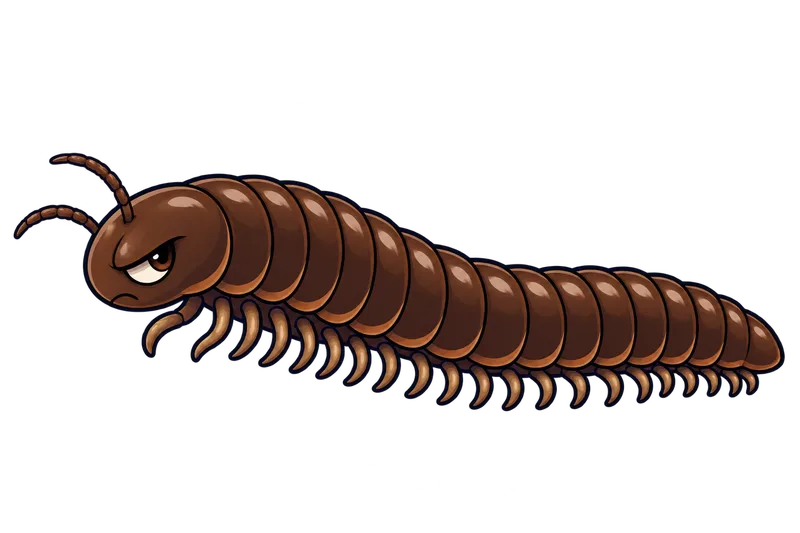
No, millipedes are not dangerous to human health, pets, or your home because they cannot bite, sting, transmit diseases, or eat structural wood. These slow-moving, dark-segmented creatures are completely harmless, though handling them roughly can cause them to release a defensive fluid that may irritate sensitive skin or leave a temporary stain.
What is actually going on
You walk into the basement on a damp Tuesday morning, flick on the light switch, and spot a dozen small, dark, segmented creatures curled into tight little spirals near the laundry sink. Your first instinct might be to tense up, suspecting a venomous infestation or a colony of pests chewing through your baseboards. Are millipedes dangerous? The short answer is no, because they are completely harmless to human health, pets, and your home, as they cannot bite, sting, transmit diseases, or eat structural wood.
To understand why they are gathered in your basement, you have to look at what drives them indoors in the first place. Millipedes are outdoor creatures that live in damp soil, leaf litter, and garden mulch, where they happily spend their days munching on decaying plant matter. But when heavy seasonal rains saturate the ground or a severe drought dries out their preferred habitat, their living conditions become unlivable. They embark on mass migrations seeking balance, and your concrete foundation just happens to stand in their way.
Once they slip inside through gaps under doors or cracks in the foundation, they find themselves in deep trouble. Standard indoor air is far too dry for them, and they lack the thick waxy body covering needed to hold onto moisture. Without rotting leaves or damp soil to feed on, indoor millipedes typically dry out and die within forty-eight hours. They do not mate indoors, they do not build nests, and they certainly do not chew on your drywall or furniture.
You might wonder why they curl up so dramatically when you approach them with a broom. That tight, watch-spring spiral is their primary defense mechanism, meant to protect their softer undersides from birds and ground beetles. When they are crushed or handled roughly, they also release a defensive liquid from tiny pores along their sides. This fluid can smell a bit pungent and leave a temporary stain, but it is a passive chemical reaction rather than an aggressive attack.
People often wonder why these creatures appear in waves rather than as isolated stragglers. The explanation lies in their biology as detritivores that depend entirely on moisture and decomposing organic matter. When the soil balance shifts dramatically outdoors, their populations experience displacement rather than an intentional invasion of your living space. They are simply tracking humidity gradients, moving toward the coolest, dampest perimeter walls of a structure.
Because they lack lungs and breathe through a system of tiny openings that lose moisture rapidly, dry indoor air acts as a natural barrier to their survival. An unfinished basement or a damp crawl space might offer temporary relief, but without a constant supply of wet soil and rotting wood, they cannot establish a permanent home. They are accidental tourists in every sense of the word, pushed past their normal boundaries by extreme weather.
How to tell for sure
People often mix millipedes up with centipedes, which causes unnecessary panic. If you are looking at a slow-moving, cylindrical brown or black crawler that looks like a tiny train track in motion, you are usually looking at a millipede. The easiest way to tell them apart is to look closely at their legs. Millipedes have two distinct pairs of legs attached to each visible body segment, while centipedes have only one pair per segment.
Another reliable cue is how they move. Millipedes tend to crawl in a slow, steady, wave-like motion, whereas centipedes dart across the floor with surprising speed. If the creature in front of you is moving leisurely and curling into a tidy spiral when nudged, it is a millipede. Centipedes are fast predators equipped with venomous claws, but millipedes lack any mouthparts capable of piercing human skin.
You usually find them clustered in damp, low-lying areas of the house such as unfinished basements, crawl spaces, or ground-floor laundry rooms. They rarely venture upstairs into dry living spaces unless humidity levels are exceptionally high throughout the entire home. Spotting them indoors usually means there is an environmental trigger right outside your exterior walls, such as heavy mulch beds or poor drainage keeping the soil against your foundation saturated.
What usually comes next
When you find a handful of these accidental tourists indoors, your best practical move is to reach for your vacuum cleaner instead of a shoe. Sweeping them up or sucking them into a vacuum bag avoids the yellow-brown skin stains and lingering defensive odors that happen when you crush them against baseboards or carpet fibers. Once you finish vacuuming, simply take the vacuum bag outside and toss it into your outdoor trash bin.
Indoor pest sprays are entirely unnecessary here. Because millipedes die off quickly on their own once they cross into dry indoor air, chemical treatments inside your living spaces solve a problem that is already solving itself. Instead of treating the symptoms indoors, focus your energy on the exterior perimeter where the migration started.
Take a walk around your foundation and check how your landscaping is set up. If you have thick organic wood mulch piled directly against your exterior walls, pull it back to create a two to four foot border of bare soil or crushed stone. This simple adjustment removes their damp outdoor shelter right next to your entry points, stopping the migration before the creatures ever reach your door.
When to get help
Most millipede encounters require nothing more than a vacuum and a little landscape cleanup, but certain situations call for outside help. If your home experiences massive migrations where hundreds or thousands of millipedes crawl up your foundation walls every day, standard DIY exclusion and vacuuming may not be enough. In those heavy influx scenarios, bringing in a licensed pest control professional to evaluate exterior perimeter barriers is the right path forward.
On the health side, direct contact with millipede defensive fluid can occasionally irritate sensitive skin or leave a temporary stain. If you accidentally handle them or crush them bare-handed, wash the area thoroughly with soap and water. Should the fluid get into your eyes, flush them immediately with clean, lukewarm water or saline solution.
Do not try to diagnose skin reactions or unusual lesions from photos or descriptions. If you or a family member experience persistent skin burning, severe eye pain, or any sign of a significant allergic reaction, contact a primary care clinician, visit an urgent care facility, or call your regional poison control center for guidance.