
What do millipedes eat?
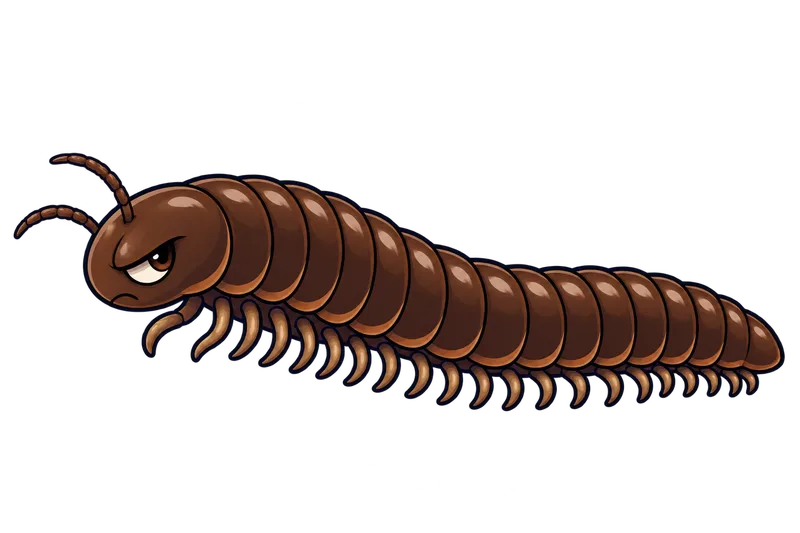
Millipedes eat decaying organic matter such as damp leaf litter, rotting logs, compost piles, and garden mulch. They use tiny chewing mouthparts to scrape up moist plant debris outdoors, and they want nothing to do with your drywall, clothes, or household wood framing.
What is actually going on
You walk down to the basement on a humid Tuesday morning to switch out a load of laundry, and there you spot them. A couple of dark, segmented crawlers are curled up near the base of the washing machine, looking a bit like tiny, coiled springs. You might wonder how they got in there and, more importantly, if they are hunting for a late-night snack in your pantry or chewing away at your floorboards.
To put your mind right at ease, millipedes eat decaying organic matter, meaning they want nothing to do with your drywall, your clothes, your cereal boxes, or the wood framing of your house. Out in nature, they spend their days tucked beneath damp leaf litter, rotting logs, compost piles, and thick layers of garden mulch, scraping up moist plant debris with their tiny chewing mouthparts. They are nature's quiet little recyclers, turning fallen autumn leaves and rotting bark back into rich soil.
So why are they marching across your basement floor then? Usually, they are victims of bad weather timing. A heavy rainstorm can completely flood their outdoor homes, forcing thousands of them to crawl upward in search of higher, drier ground. When they wander near your foundation wall, a few manage to slip beneath a worn door sweep or through a tiny gap in a basement window.
Once they get inside, they hit a dead end. Modern living spaces lack the high humidity and damp organic detritus they need to survive, which means indoor millipedes cannot feed, breed, or build colonies. They are essentially lost wanderers that dry out and die within a couple of days, meaning your home is serving as an accidental desert rather than an all-you-can-eat buffet.
Millipedes are primarily detritivores and saprophagous organisms, meaning they derive their nutrients from dead and decaying plant material rather than living tissues or structural wood. They thrive outdoors in sustained high humidity where organic mulch and damp soil meet. When seasonal weather anomalies occur, such as severe drought or heavy rain saturation, their natural outdoor microclimates collapse. These environmental shifts trigger mass migrations where millipedes wander outward in search of moisture, accidentally breaching building perimeters through foundation gaps or door sweeps.
How to tell for sure
People often mix up millipedes and centipedes, which is fair enough when you are staring at a dark bug scuttling across a dim room. If you want to know what you are looking at, you usually just need to check how many legs each body segment has or watch how the creature moves across the floor.
Millipedes are part of a biological group with two pairs of legs on most of their body segments. When a millipede walks, its legs move in a smooth, wave-like motion that looks a bit like a tiny zipper closing up. They are famously slow and deliberate, and if you startle one, it will curl right up into a tight, defensive spiral instead of dashing for cover.
Centipedes, on the other hand, have just one pair of legs per body segment and a noticeably flatter body shape. They move with startling speed, darting along baseboards like erratic shadows, and they hunt other bugs using venomous fangs. Millipedes do not have biting fangs, stingers, or venom glands, making them entirely defenseless aside from curling up or releasing a smelly liquid.
What usually comes next
Since indoor millipedes are just accidental visitors that will soon dry out, spraying your baseboards with heavy chemicals is usually a waste of time and effort. The smart move is to cut off their access at the source by shifting your focus to the outside of your house.
Take a walk around your foundation and look at how your garden beds meet your exterior walls. If you have thick layers of wood mulch piled right up against the bricks or siding, you are essentially rolling out a welcome mat for every millipede in the yard. Rearing back that mulch to create a wide barrier of bare dirt, gravel, or stone changes the local environment completely.
By keeping that perimeter dry and free of rotting leaves, woodpiles, and damp garden debris, you take away the moist habitat millipedes need to stay alive. Pair that outdoor cleanup with a tube of caulk for foundation cracks and a fresh door sweep, and you will stop the migration before it reaches your living room.
When to get help
Millipedes carry practically no risk because they do not transmit diseases, chew through your woodwork, or bite people. Handling them can sometimes lead to a minor surprise, though. When threatened or crushed against human skin, some species release defensive fluids from glands along their sides that can cause mild irritation for sensitive folks, which you can easily wash off with soap and water.
If you notice unexplained skin marks or persistent rashes, you should talk to a doctor or visit an urgent care clinic right away, because the culprit was likely a centipede or a different pest altogether rather than a harmless millipede.
As for pest control, you do not need to call in outside help for a stray crawler on a rainy afternoon. If you run into massive yearly migrations where thousands of millipedes pile up against your doorways and ignore your best sealing efforts, that is the moment to bring in a licensed pest professional to check your perimeter and apply proper outdoor treatments.