
Do millipedes really have 1,000 legs?
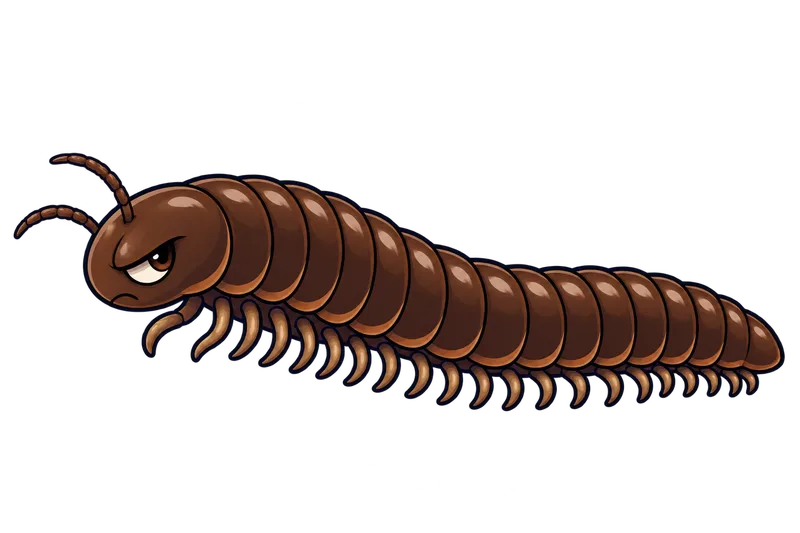
No, common millipedes do not actually have 1,000 legs. Despite a Latin name translating to thousand feet, most species you encounter around a house possess roughly sixty to a few hundred total legs, which falls well short of that famous anatomical milestone.
What is actually going on
You walk down to the basement on a crisp October morning to grab the spare recycling bin, and there they are. Half a dozen slow-moving, worm-like creatures are inching across the concrete floor near the sump pump, each one curled into a tight, defensive spiral. Your first instinct is probably to wonder how on earth a handful of tiny ancient accordions managed to march inside, and your second is likely to question that famous nickname.
Do millipedes really have one thousand legs? The short answer is no, they do not. Despite a name rooted in Latin that translates literally to thousand feet, common millipedes fall well short of that ambitious anatomical milestone. Most species you will encounter around a house typically possess somewhere between thirty and several dozen pairs of legs, which adds up to roughly sixty to a few hundred total. While that is still a remarkably busy underside for such a small creature, it is a long way from the thousand-legged mark.
Why the dramatic exaggeration in the name, then? People have been watching these armored little detritivores plow through leaf litter for centuries, and counting legs on a moving, writhing crawler that fits on a thumbnail is genuinely difficult. When a creature moves in a synchronized, wave-like propulsion from front to back, it looks like it has infinite moving parts.
Beyond the math, their presence inside a home usually points to an outdoor problem rather than an indoor infestation. Millipedes live outdoors in damp, decaying organic matter like hardwood mulch, compost beds, and rotting logs. When heavy autumn droughts dry out their favorite garden habitats, or torrential seasonal rains flood their underground soil voids, they migrate. They wander indoors by accident, seeking moisture and moderate temperatures, only to succumb quickly to dry indoor air because they cannot reproduce or survive long-term inside a clean residential living space.
Before you decide what to do about an unfamiliar crawler, you usually want to confirm what you are looking at. Millipedes are easy to recognize once you know what details matter. They are cylindrical, worm-like, and move at a very deliberate, unhurried pace. If you nudge one with a pencil or a piece of paper, it will usually freeze and coil tightly into a flat spiral shape, protecting its softer underside.
If you want to be completely certain, you can look closer with a tenfold hand lens or a smartphone macro lens. Millipedes belong to a class of animals called Diplopoda, which means double-footed. If you inspect their visible body segments, you will usually find two pairs of jointed legs on each segment. This sets them apart immediately from centipedes, which possess only a single pair of legs per segment and tend to move in a frantic, darting dash rather than a steady crawl.
You also do not need to worry about structural damage or painful bites. Millipedes lack venomous fangs, stingers, or mouthparts capable of piercing human skin, and they have zero interest in eating your furniture, clothes, or house framing. Their diet consists strictly of rotting plants and fungi.
The only real defense mechanism they keep in reserve is chemical rather than mechanical. When handled roughly or crushed, some species release a pungent, foul-smelling defensive fluid. While harmless to intact human skin in tiny amounts, that fluid can occasionally cause minor skin staining or mild irritation if you rub your eyes afterward. A simple piece of paper or a paper towel makes for a much better transfer tool than bare fingers.
How to tell for sure
When you find a few wandering millipedes indoors, your most practical immediate choice is to reach for the vacuum cleaner instead of a chemical spray. Vacuuming up stray crawlers is fast, clean, and entirely free of indoor aerosols. Once you finish sucking up the guests, take the vacuum bag or empty the canister straight into an outdoor waste bin so you do not have to worry about lingering odors or escapees.
Focusing entirely on indoor pesticide treatments is usually a waste of time and effort because these creatures cannot establish a permanent population inside dry human homes anyway. Instead, look outside your foundation walls. Because their indoor appearance is a biological signal of excessive exterior moisture or unsealed entry points, the best long-term move is to manage the outdoor transition zone.
Creating a dry perimeter makes a massive difference. Pulling back heavy hardwood mulch, leaf litter, and woodpiles so they sit at least twenty feet away from your exterior walls cuts off their preferred shelter. Establishing a clear, two to four foot border of bare soil, gravel, or river rock right against the foundation creates a dry desert that deters moisture-loving crawlers from crossing over.
At the same time, sealing up obvious entry points keeps accidental wanderers outside where they belong. Causing up foundation cracks, installing sturdy door sweeps on exterior doors, and making sure your window wells and crawlspace vents are properly sealed will stop them from finding a backdoor into your basement.
What usually comes next
Most indoor millipede sightings are simple seasonal inconveniences that resolve themselves once the weather settles or you tidy up your outdoor foundation mulch. However, certain situations call for outside expertise.
When to get help
If you experience massive seasonal migrations where thousands of millipedes crawl up your foundation walls and overwhelm your everyday household efforts, you should bring in a licensed pest control professional. A commercial applicator can evaluate exterior barrier treatments and handle large-scale perimeter defense safely, ensuring that any chemical products used on your foundation strictly follow product label directions.
You should also look for professional help when indoor migrations happen continuously despite your best efforts at sealing gaps and clearing mulch. Chronic, unending invasions usually point to underlying structural drainage failures, such as a chronically flooded sub-floor, a leaking crawlspace, or poor grading that directs water straight toward your foundation walls. These structural issues require a contractor or drainage specialist rather than a pest spray.
On the health side, if you or a child accidentally gets defensive millipede fluid directly into the eyes, or if you develop an unusual or severe skin reaction after handling them, skip the home remedies and reach out to a healthcare clinician, urgent care clinic, or your local poison control center for guidance.