
How do you deal with millipedes in a basement?
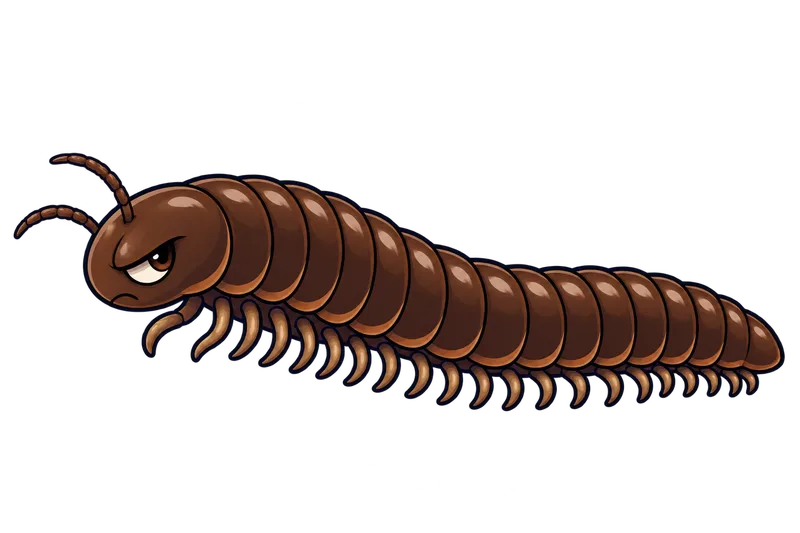
You deal with millipedes in a basement by vacuuming up the current stragglers and running a dehumidifier to keep indoor humidity below fifty percent. These harmless, dark brown creatures are about an inch long and typically wander inside due to outdoor weather changes. Managing them depends on pulling leaf piles away from your foundation and sealing entry gaps.
What is actually going on
You walk down to the basement to switch out a load of laundry, flick on the overhead light, and notice a dozen dark, worm-like creatures slowly parading across the concrete floor. They look like tiny little accordions on legs, and your first thought is probably that you have a major infestation on your hands. But before you panic and reach for a heavy-duty chemical spray, take a deep breath. Dealing with millipedes in a basement is less about wiping out a breeding colony inside your home and more about managing the outdoor weather and sealing up the tiny gaps where these wandering bugs slip inside.
Millipedes are outdoor creatures by nature, spending their lives in damp soil, leaf litter, and mulch beds where they quietly munch on decaying plant matter. Think of their sudden appearance indoors as an emergency weather evacuation. When heavy spring rains saturate the soil and flood their underground tunnels, or when a scorching summer drought dries up their preferred habitat, they scramble upward and outward to survive. They find your concrete foundation walls, crawl through tiny gaps, and end up wandering across your basement floor purely by accident.
Because basements lack the dark, wet, decaying organic matter that millipedes need to survive, these little travelers cannot set up camp and reproduce inside your house. In fact, the dry air in a typical finished or semi-finished basement dehydrates them rapidly, and they usually die within hours or days anyway. They do not bite, they do not sting, they do not carry diseases, and they certainly do not chew on your structural wood or electrical wiring. They are simply harmless, moisture-seeking wanderers that took a wrong turn at your foundation.
That does not mean you have to share your laundry room with them, of course. Controlling them comes down to a straightforward process of physical removal, blocking their entry points, changing the landscape right outside your walls, and drying out the basement air. Once you cut off their access to moisture and shelter, they stop showing up.
How to tell for sure
Millipedes are usually about an inch long, sporting a cylindrical, dark brown or black body that moves with a slow, hypnotic, wave-like motion of dozens of tiny legs. If you look closely or use a magnifying glass, you will notice the defining trait of a millipede: each body segment carries two distinct pairs of legs. This separates them instantly from centipedes, which usually move much faster, have flattened bodies, and sport only one pair of legs per segment. When you touch or disturb a millipede, it will usually curl itself up tightly into a flat, spiral ring that looks just like a tiny watch spring.
People often mistake them for other basement crawlers or worry that they might inflict a painful bite. Rest assured that millipedes do not possess fangs or mouthparts capable of piercing human skin. If you handle one roughly, the worst it might do is secrete a defensive fluid from tiny openings along its sides. This fluid has a distinct, unpleasant odor and can occasionally cause mild skin or eye irritation, but it is entirely harmless otherwise.
If you find yourself wondering whether you are dealing with millipedes or something far more destructive like termites or carpenter ants, look at the damage. Millipedes leave your drywall, framing, and stored cardboard boxes completely alone. If you find strange debris or suspect a different pest entirely, a preserved specimen can be checked by a local university extension service, but a quick glance at those double leg pairs usually tells you everything you need to know.
What usually comes next
You have a choice to make right now: do you spend your Saturday afternoon vacuuming up the current stragglers and hoping they stop coming, or do you fix the environmental triggers that invited them inside in the first place? Vacuuming is the fastest way to deal with the ones currently marching across your floor. Just make sure you take the vacuum bag outside immediately, seal it tightly in a plastic trash bag, and toss it in an outdoor bin so the defensive odors do not linger in your home.
Vacuuming solves the immediate aesthetic problem, but it does nothing to stop tomorrow's batch of wanderers. If you want them to stop appearing in your basement, your single most effective practical decision is to tackle the moisture and the perimeter buffer zone outside. Millipedes cross your threshold because they are chasing dampness. If you pull organic mulch and leaf piles a few feet away from your foundation wall, replace that mulch with a clean strip of gravel or crushed stone, and run a dehumidifier to keep your basement humidity strictly below fifty percent, you pull the welcome mat right out from under them.
When to get help
Most millipede visits are minor and manageable with basic home maintenance, but certain situations call for reinforcements. If you walk into your basement and find hundreds or thousands of millipedes continuously pouring through the walls in a massive migration event, it is time to call a licensed pest management professional who can properly evaluate your perimeter and apply targeted outdoor barrier treatments safely. Persistent indoor sightings can also point to major structural drainage failures, such as a cracked foundation wall letting in pooling groundwater or an unvented crawl space holding trapped moisture that requires specialized remediation.
On the health side, if you accidentally crush a large number of millipedes and get their defensive secretions into your eyes or onto sensitive skin, wash the area thoroughly with soap and water. If irritation persists or becomes severe, consult a medical clinician or contact your local poison control center. For commercial properties, food processing facilities, or archival storage spaces where any foreign insect triggers strict regulatory failure or product contamination, rely exclusively on certified commercial pest control services to maintain compliance.