
How can you prevent millipedes from entering the house?
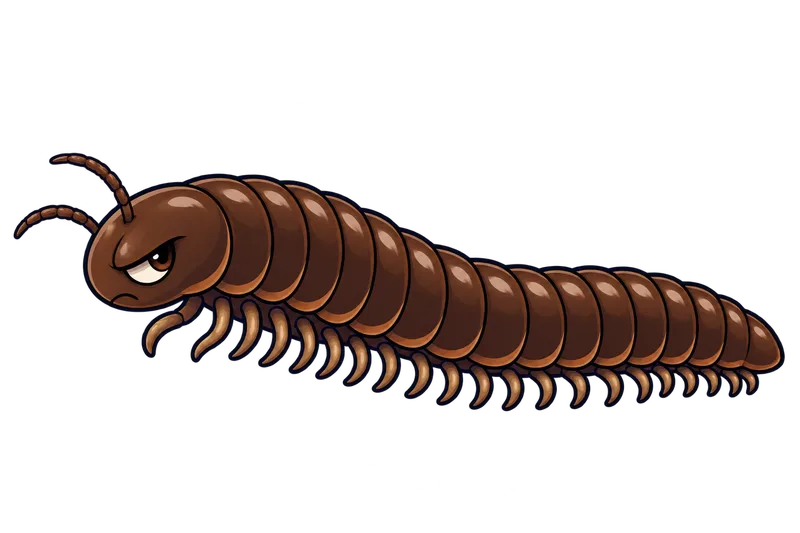
You prevent millipedes from entering the house by managing outdoor moisture, closing foundation gaps, and changing what sits right against your walls. To keep them away from your doors, pull back organic mulch and create a two to four foot wide barrier of crushed stone or river rock.
What is actually going on
You walk into the basement on a damp Tuesday morning after a night of heavy rain, and there they are. Dozens of small, segmented crawlers are inching across the concrete floor, curling into tight little watch springs the moment your shoe gets close. It looks like a minor horror movie, but you do not need to panic. Keeping millipedes out of the house is not about fighting off an invasion. It is about managing the moisture and gaps that turn your foundation into a temporary shelter during bad weather.
Millipedes are moisture-loving creatures that naturally spend their time outdoors under damp leaf litter, mulch beds, rotting logs, and compost piles. They do not want to live in your living room. In fact, standard indoor air is usually far too dry for them, meaning most of the ones you find inside will dehydrate and die within a few days anyway. The trouble starts when extreme weather hits. Heavy, soaking rains fill the air pockets in the garden soil with water, forcing millipedes to evacuate upward and outward. Alternatively, a brutal summer heatwave bakes their outdoor habitat, driving them toward the cool, shaded concrete of your foundation in search of relief.
Because they are simply looking for a place to survive, stopping them requires cutting off their welcome mat before they even reach your walls. You prevent millipedes by changing what sits right against your foundation, closing up the physical cracks they use to squeeze inside, and managing outdoor moisture so your yard stops acting like a transit lounge. They do not bite, they do not carry diseases, and they certainly do not chew on your wooden framing. They are just bad neighbors looking for a dry basement.
When you find these creatures indoors, you are witnessing a survival evacuation rather than a deliberate home invasion. In nature, millipedes feed on decaying leaves, wood, and plant debris. They need high relative humidity to keep their bodies from drying out. When heavy rain saturates the soil, air pockets fill with water, and the millipedes are forced to move upward to avoid suffocating. When a drought hits, the opposite happens. The dry earth forces them to seek shade and moisture near your home. They wander inside by accident because your foundation wall happens to be the closest cool, damp barrier in their path. Once inside, they cannot find the decaying matter they need to eat, and the dry indoor air finishes them off quickly.
How to tell for sure
Before you start sealing gaps, you usually want to make sure you are actually dealing with millipedes rather than something else that requires a different approach. Millipedes belong to the class Diplopoda, and their defining feature is right there in their anatomy. If you look closely, they usually possess two pairs of legs on every visible body segment. When you touch them or startle them, they typically curl up into a tight, flat spiral that looks like a miniature metal spring. They move relatively slowly, grazing on decaying organic matter rather than hunting other insects.
People frequently confuse them with centipedes, which belong to the class Chilopoda. Centipedes are built for speed, have only a single pair of legs per body segment, and feature a flattened body rather than a rounded, cylindrical one. If a fast, flattened bug darts across your baseboard like it is late for an appointment, you are usually looking at a centipede, not a millipede. Millipedes also lack the venomous mouthparts that centipedes use to subdue prey.
What usually comes next
Once you realize you are dealing with moisture-driven occasional visitors rather than wood-destroying pests, you face a simple choice. You can either chase them with a vacuum every time it rains, or you can change the perimeter of your house so they stop reaching your doorstep. Relying only on indoor cleanup is a losing battle because it treats the symptom instead of the source.
Choosing the permanent route means working on the narrow strip of land right against your foundation. Most homes have decorative wood mulch, bark chips, or thick flower beds touching the exterior walls. These materials trap moisture and give millipedes a fine shelter right next to your doors and ground-level windows. To fix this, you generally need to pull back that organic mulch and create an inorganic barrier zone. Lay down a breathable fabric barrier for landscaping, never non-porous black plastic, and cover it with a two to four foot wide band of crushed stone, river rock, or gravel.
This stone border dries out quickly in the sun, creating a dry strip that millipedes would rather avoid. Pair that rock barrier with a tube of exterior caulk to seal foundation cracks, install a heavy-duty sweep beneath your exterior doors, and you break the cycle of migration. If you skip the landscaping change and only spray store-bought chemicals or lay down traps, the millipedes will usually just march right back across the mulch as soon as the weather shifts again.
When to get help
There are times when a do-it-yourself approach hits a wall and you need outside support. If heavy seasonal migrations are overwhelming your home and thousands of millipedes are breaching your living spaces despite a new gravel border and sealed doorways, you should call a licensed pest management professional. Commercial applications often involve specialized barrier treatments applied to the exterior foundation wall, which require proper equipment and training to handle safely.
You also need professional help if the issue points to structural defects that go beyond simple caulking. When foundation cracks are severe enough to require professional masonry repair, or when crawlspace moisture requires heavy-duty plastic sheeting and sump pumps, a pest technician or a structural contractor should step in. Furthermore, if you or someone in your home experiences persistent breathing trouble, severe allergies, or asthma attacks triggered by the accumulation of insect fragments and shed skins in wall voids, consult a clinician right away.
When handling chemical barriers yourself, remember that product labels are legally binding under the law. Synthetic perimeter sprays commonly used for outdoor defense can harm aquatic life like fish and beneficial pollinators like honeybees, meaning they must never be applied near storm drains, standing water, or flowering plants visited by bees. If you are ever unsure about handling concentrated formulas, wearing the required safety gear, or applying products near sensitive environmental areas, hand the job over to a licensed applicator who follows local regulations by the book.