
Centipede vs millipede in a basement: which features differ?
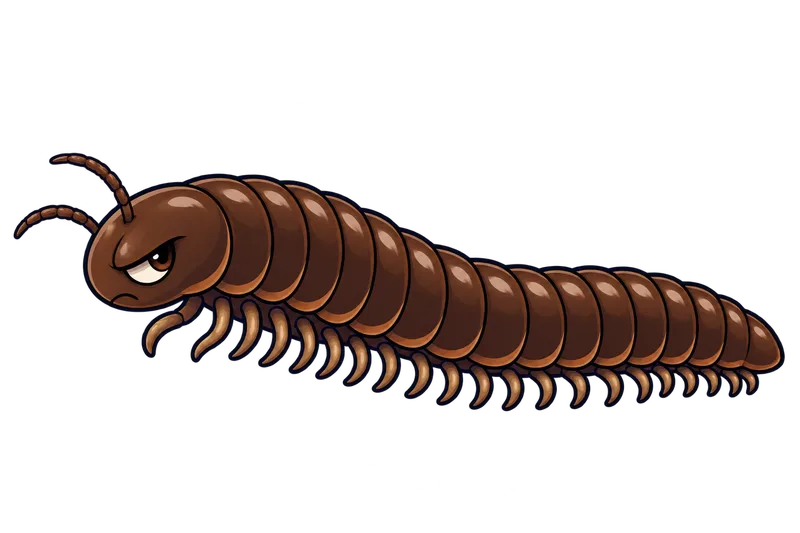
House centipedes and millipedes differ in body shape, movement, leg attachment and diet. Centipedes are flat with long legs sticking out from the sides, run very fast and hunt other bugs, while millipedes have rounded bodies with short legs tucked underneath, crawl slowly, curl up when disturbed and eat decaying organic matter.
What is actually going on
You flip on the basement light to switch out a load of laundry, and something long-legged and terrifying instantly darts across the concrete wall. Naturally, your mind races through every pest horror story you have ever heard. Before you grab a heavy boot or call for emergency help, take a breath. You are almost certainly looking at either a house centipede or a millipede. While both creatures love the damp, dark corners of a basement, they are entirely different animals living very different lives under your house.
The main feature that sets them apart comes down to their body shape and how they are put together. Centipedes are flat like ribbons, move with startling speed, and are actually hunting other bugs in your basement. Millipedes are cylindrical like tiny pipe cleaners, crawl slowly in deliberate waves, and simply wandered inside by mistake from the garden mulch. People often lump them together because they both have a lot of legs, but treating them the same way is a mistake.
A common doubt you might have is how two bugs that look somewhat similar can behave so differently. The secret lies in what they eat. Centipedes are strict carnivores equipped with venomous claws to hunt silverfish, spiders, and roaches. Millipedes are harmless plant eaters that feed exclusively on decaying organic matter and mold. One is an active predator patrolling your basement shadows, and the other is a lost garden tourist that will likely dry up and die once it hits the indoor air.
How to tell for sure
If you want to know what you are actually dealing with, look at how the creature moves and how its legs are attached. You usually do not need a magnifying glass to spot the obvious differences if you catch them in the open.
Centipedes usually have a flattened body profile that lets them slip through paper-thin cracks in foundation walls. Their legs protrude visibly outward from the sides, and they usually have fifteen pairs of long, delicate legs that let them sprint across surfaces with the speed of a startled mouse. When you turn on a basement light, a centipede acts like a burglar caught in a spotlight, sprinting frantically for the nearest dark shadow.
Millipedes usually feature a rounded, sub-cylindrical body that looks like a miniature dark cocktail straw. Their legs are tucked directly beneath the body, making them barely visible from above as the creature glides along in a slow, steady wave. If you disturb a millipede, it will not run. It typically stops, curls tightly into a flat spiral disc, and often releases a foul-smelling chemical defense from lateral glands.
Leg count offers another definitive clue, though you might need a closer look to be sure. Centipedes always have one pair of legs per visible body segment. Millipedes feature fused segments called diplosegments, resulting in two pairs of legs per visible segment. Neither centipedes nor millipedes will ever eat your structural timber, chew your drywall, or damage stored books and clothing.
What usually comes next
Finding these critters down in the basement rarely calls for breaking out heavy chemical sprays or indoor foggers. Seeing either of them usually points to an excess moisture problem, and that is where your attention needs to go.
Keeping your basement relative humidity firmly below fifty percent tends to fix the issue on its own. Running a solid dehumidifier through the warmer months strips out the damp air house centipedes need to stay alive and creates a dry climate that dries up wandering millipedes in a hurry.
You also want to step outside and cut off their entry points at the source. Clear away heavy leaf piles, deep mulch, and stacks of firewood sitting right up against your exterior foundation. Setting up a dry border of gravel or river rock around the house stops outdoor pests from settling in right outside your basement windows and floor joists. Grab a tube of caulk or some mortar patch and seal up any cracks in the foundation, gaps around water pipes, and worn weather stripping beneath basement doors.
When to get help
Most basement run-ins with centipedes or millipedes are minor household annoyances, but certain situations mean you should call in backup.
If you spot a massive, overwhelming wave of millipedes flooding your lower level after heavy spring rains or summer storms, you might be looking at a serious drainage failure outside. When the yard slopes toward your house or the perimeter drains fail, a professional landscaper or drainage expert needs to step in and fix the water flow.
Health risks stay pretty low, but they do crop up with certain types. Ordinary house centipedes rarely manage to break human skin, but larger tropical or desert varieties found across the southern and western states can deliver a painful, venomous bite much like a bee sting. If a centipede bite leads to heavy swelling, spreading redness, or an allergic reaction, do not try to guess what to do. Reach out to a clinician, urgent care center, or your local poison control center right away. On the other side, the defensive liquid secreted by some millipedes can irritate your skin or sting your eyes, so just wash the spot thoroughly with soap and water if you happen to touch one.
Bring in a licensed pest control professional if you keep seeing pests indoors even after running a dehumidifier and sealing up the exterior, or if you need proper outdoor perimeter treatments applied safely around your foundation.