
Are millipedes poisonous?
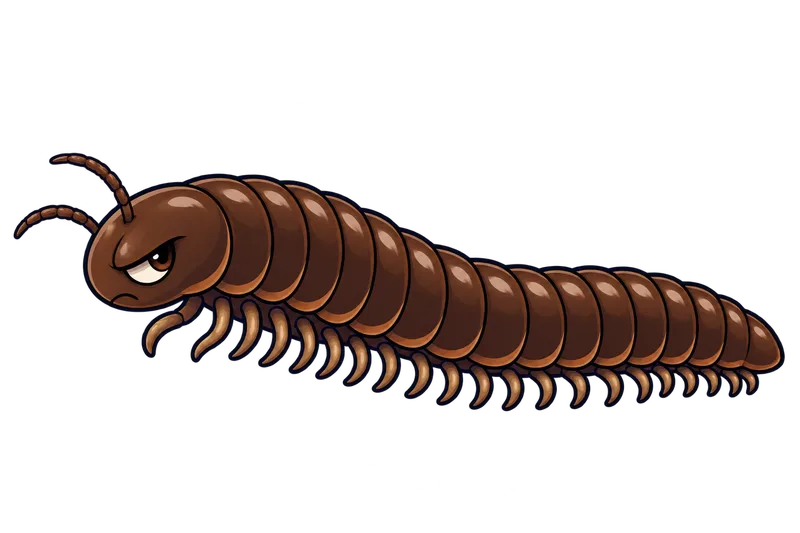
Millipedes are not poisonous in the traditional sense, and they cannot bite or sting humans. When startled, a millipede rolls into a defensive coil and oozes a foul-tasting liquid from tiny pores. This fluid can cause mild skin irritation or a burning sensation if you touch it and rub your eyes, but the creatures are otherwise harmless.
What is actually going on
You walk down to the basement on a damp Tuesday morning to switch out a load of laundry, and there it is: a shiny, dark brown creature with a great many tiny legs, inching its way across the concrete floor. Your first instinct might be to jump back or grab a rolled-up magazine, wondering if it is going to bite you, or worse, drop venom on your bare feet.
Let us clear that worry up right away. Millipedes are not poisonous in the way people usually mean, and they certainly cannot bite or sting humans. They lack fangs, jaws, or any kind of venom-injecting stinger. If you picked one up, your main risk would not be a hospital visit, but rather a stubborn, foul-smelling stain on your fingers and a rather pungent chemical odor.
Think of a millipede as a tiny, peaceful armored tank of the garden world. When something startles it, it does not turn around to fight. Instead, it rolls itself up into a tight, defensive coil, like a watch spring, and oozes a foul-tasting liquid from tiny pores along the sides of its body. That liquid is meant to discourage hungry toads and birds, not to hunt prey.
While that defensive secretion is not fatal or venomous, it does have a bit of a kick if you handle them roughly or crush them underfoot. The fluid can cause mild skin irritation, discoloration, or a burning sensation if you accidentally rub your eyes afterward. But as long as you do not go out of your way to squeeze them, they are entirely harmless guests that stumbled into the wrong part of the house.
How to tell for sure
People often mix up millipedes and centipedes, which is unfortunate because their personalities and defense strategies are entirely different. If you want to know what you are looking at, you just need to look closely at how the legs are arranged under the body.
Imagine a centipede is like a high-speed express train with a single pair of legs sticking out on each side of every car. They are usually flattened, move with surprising speed, and are active predators. If you corner a centipede, certain large species can and will use their front claws to deliver a painful pinch that feels something like a bee sting.
A millipede, on the other hand, is like a slow-moving freight train with two pairs of legs tucked underneath every visible segment. Their bodies are typically rounded and cylindrical, and they crawl along at a rather leisurely pace. If you see a creature moving with that steady, rippling rhythm, it is usually a millipede just looking for moisture.
Another clue is where you find them. Millipedes are outdoor detritivores, meaning they belong outside in the damp leaf litter, mulch, and decaying wood where they feed on organic debris. When heavy rains saturate the soil, or when a dry summer bakes the garden, they migrate toward cooler, damp spots. That is usually how they end up crossing your basement threshold.
What usually comes next
Since these creatures are basically lost travelers that cannot survive long inside a dry, air-conditioned home, your best move is simple physical removal instead of a panic-driven chemical spray. They need high humidity to breathe and stay alive, so an indoor environment will naturally dry them out within a few days anyway.
If you spot a few stragglers crawling across the floor, reach for the vacuum cleaner hose instead of your shoe. Vacuuming them up lets you clear them away instantly without triggering their defensive scent glands. Crushing them against a hardwood floor or a rug will release that brownish defensive liquid, leaving behind a stain and an unpleasant odor that is remarkably stubborn to scrub out.
Once you empty the vacuum canister or bag into an outdoor trash bin, your next practical step is to look at the exterior of the house. Because they are moisture-driven invaders, you can stop them at the door by creating a dry perimeter. Pulling mulch, leaf piles, and firewood back a few feet from the foundation, and sealing up gaps around ground-level windows or doors, usually cuts off their pathway entirely.
When to get help
Most millipede encounters require nothing more than a vacuum and a little common sense, but there are moments when you should hand the job over to someone else. If you live in an area experiencing severe flooding or extreme seasonal weather shifts, you might find your physical barriers overwhelmed by thousands of migrating millipedes at once. When mass numbers persistently breach your basement or crawl space despite your best exclusion efforts, that is the right time to call a licensed pest management professional to evaluate exterior perimeter treatments.
On the health side, things are usually straightforward, but accidents happen. If you get defensive fluid on your skin, wash the area thoroughly with soap and water to clear away any lingering irritation.
If you accidentally rub your eyes with unwashed hands after handling one, or if you develop a severe skin reaction from the secretions, do not try to diagnose yourself at home. Point yourself toward a medical clinician, an urgent care center, or your local poison control center for proper guidance. Keep in mind that skin reactions, rashes, and marks can never be accurately identified from a description or a quick photograph alone, so professional medical eyes are always required when symptoms turn severe.