
Are millipedes insects?
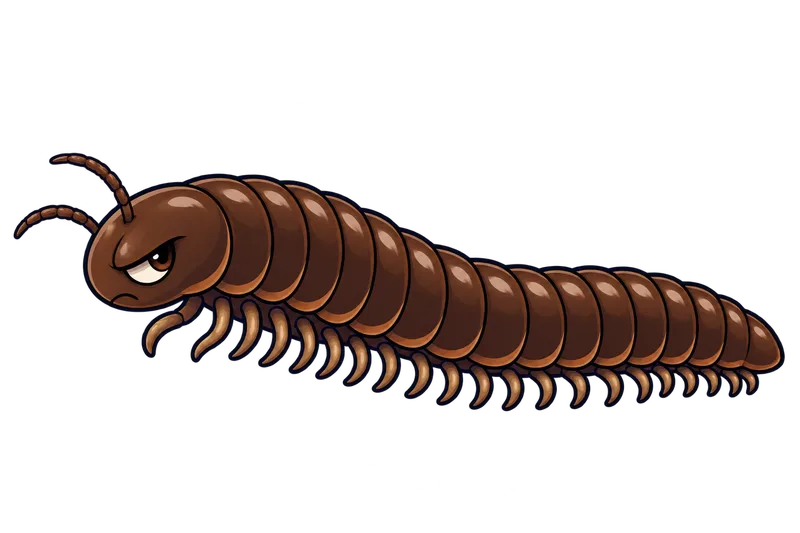
No, millipedes are not insects at all. While both are arthropods, millipedes belong to the class Diplopoda with segmented bodies and thirty or more pairs of legs rather than the six legs found on true insects.
What is actually going on
Imagine walking into your basement on a humid Tuesday morning and spotting a dark, worm-like creature with dozens of tiny legs inching its way across the concrete floor. You might automatically reach for the nearest shoe or grab a can of bug spray, figuring it is just another creepy-crawly insect that found a way inside. But are millipedes insects? No, millipedes are not insects at all. While both belong to the larger animal group known as arthropods, which includes any invertebrate with an exoskeleton and jointed legs, they split off into entirely different scientific classes. Insects belong to the class Insecta, whereas millipedes belong to the class Diplopoda.
You might wonder why it matters whether a multi-legged crawler is technically an insect if it still gives you the shivers in your basement. It matters because understanding what they are changes how you deal with them. Insects have a strict body plan featuring three distinct regions, which are the head, thorax, and abdomen, plus exactly six legs and usually wings. Millipedes throw that blueprint out the window entirely. They feature an elongated, segmented body without wings, and each of their visible body rings is actually a fused pair of embryonic segments called a diplosegment. Each of those double segments bears two pairs of legs, meaning a typical millipede is walking around on thirty or more pairs of legs rather than the three pairs an insect relies on.
Think of a millipede less like a six-legged ant and more like a slow, heavily armored freight train crawling through the leaf litter, where every single passenger car has two sets of wheels underneath pushing it along. Out in nature, they act as peaceful detritivores, meaning they feed strictly on decaying organic matter, rotting wood, and fungi in damp outdoor spots. In pest control terms, they are classified as occasional invaders. They spend their lives outdoors in mulch beds and soil, but heavy seasonal downpours or dry summer heat waves can drive them out of their natural habitat. When outdoor conditions become hostile, they wander blindly into basements and crawlspaces looking for moisture, not because they want to nest or eat your house.
Spotting one of these creatures on your floor usually reveals a dark brown or black, cylindrical body measuring around an inch or so in length. When you disturb or touch a millipede, it will usually exhibit a very distinct defensive behavior by coiling itself tightly into a flat spiral ring or a C-shape. That passive coiling is a dead giveaway, as true insects do not curl up like watch springs when threatened.
If you take a closer look, you can usually verify the leg count on the underside of the body rings to confirm two pairs of legs per segment. This separates them instantly from centipedes, which have flattened bodies and only a single pair of legs per visible segment. People often confuse the two, but centipedes are fast, venomous predators built like sleek sports cars to hunt other bugs, while millipedes are sluggish, harmless bulldozer types that only want to eat rotting leaves.
You usually do not need to worry about bites or stings with millipedes because they possess neither venom fangs nor stingers. Instead, their only defense mechanism besides coiling is releasing a foul-smelling liquid from lateral glands along their bodies if they get crushed or severely stressed. That chemical secretion can stain carpets or floors, which is why stepping on them indoors is generally a messy mistake.
How to tell for sure
Since indoor air and modern heating or air conditioning create an unforgiving desert environment for a creature that needs constant dampness, invading millipedes usually dry out and die within a day or two on exposed floors anyway. Because of this, your best practical decision is to skip indoor chemical sprays entirely and focus on physical removal and basic exclusion. If you spot stragglers indoors, simply sweep them up or pick them up with a vacuum cleaner, then empty the bag or canister into an outdoor trash bin immediately to avoid any lingering odors.
To stop them from marching inside in the first place, you need to break the moisture bridge connecting your yard to your house. Millipedes thrive where damp organic debris touches your siding. Creating a wide perimeter barrier of crushed stone or gravel right against your foundation walls completely removes their preferred food and shelter sources. Combined with keeping mulch pulled back from foundation weep holes and sealing up gaps with caulk, this simple landscaping adjustment cuts off their entry routes far more effectively than any indoor pesticide ever could.
What usually comes next
Most millipede encounters require nothing more than a vacuum and a dry basement floor, but certain situations call for outside help. If you notice a massive, relentless migration pouring through your foundation walls day after day despite your best efforts at sealing gaps and clearing mulch, it is time to call a licensed pest control professional. A commercial applicator can evaluate complex foundation voids and apply targeted outdoor barrier treatments safely.
When to get help
On the health side, handling large millipedes with bare hands can occasionally cause mild skin irritation or chemical staining from their defensive secretions, in which case you should wash the exposed skin thoroughly with soap and water. If someone experiences a severe skin rash, an allergic reaction, or accidental eye contact with the fluid, contact a clinician, an urgent care facility, or your local poison control center right away.