
Are pill bugs bad for a garden?
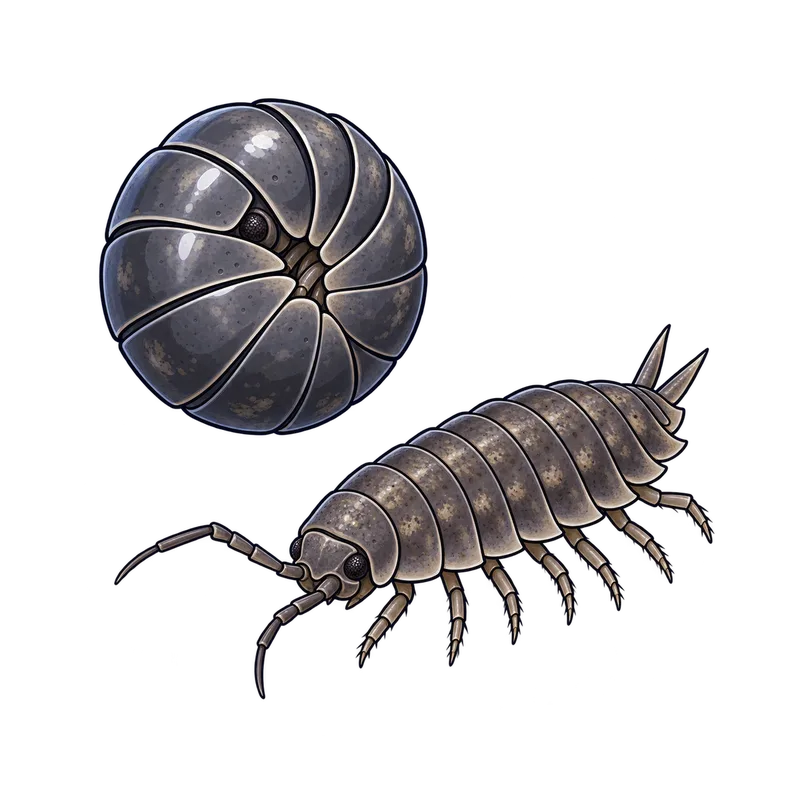
No, pill bugs are not bad for a garden at all because they act as natural decomposers that break down rotting matter into rich nutrients for topsoil. These small crustaceans measure roughly a quarter of an inch long and lack piercing mouthparts, meaning they cannot attack healthy plants.
What is actually going on
You are out in the yard on a warm Saturday afternoon, lifting up a flat stone near the tomato bed to pull some weeds, and a dozen slate gray, armor plated little creatures instantly scramble for the shadows or curl up tight. If you call them roly-polies, woodlice, or sowbugs, you are looking at one of the best friends your garden soil could ask for, even if finding them scuttling across your basement floor later makes you wonder if you have a real infestation on your hands. The short answer is no, pill bugs are not bad for a garden at all.
To understand why they are actually doing you a favor, it helps to remember what they really are. Despite crawling around on fourteen legs and getting lumped in with household bugs, they are not insects. They are terrestrial crustaceans, meaning they are much closer cousins to shrimp and lobsters than they are to ants or beetles. They traded the ocean floor for damp garden soil ages ago, but they still need high moisture to breathe through gill-like structures on their bodies. That is why they live under damp logs, heavy mulch, and thick leaf litter, quietly munching away on things that are already dead and rotting.
Their main job in nature is being a detritivore, which is a fancy way of saying they eat decaying organic matter. When leaves drop off your trees and plants wither at the end of the season, pill bugs chew through that tough cellulose and break it down into rich, usable nutrients for the topsoil. They are the cleanup crew of the garden bed. They do not have piercing mouthparts to attack healthy, living stems, and they certainly will not tunnel into your home framing or eat your drywall.
The only reason you ever see them indoors is because of bad timing and dry weather. When a heavy spring downpour floods their home under the mulch or a scorching summer drought dries out the topsoil, they start wandering around looking for moisture. They stumble through a basement crack or slip under a patio door, find themselves in a dry, air-conditioned house, and promptly dry up and die within a day or two. They cannot set up housekeeping inside because your living room is basically a desert to a creature that needs constant humidity, so finding a few dead ones near the threshold is just a sign of an outdoor traveler that took a wrong turn.
Pill bugs and sowbugs operate as natural decomposers in residential landscapes. When environmental pressures such as heavy rain or drought disrupt their outdoor habitats, they seek shelter near foundations. They enter homes as occasional invaders, where they cannot survive long-term due to indoor dryness.
How to tell for sure
Before you worry about managing them, you usually need to know what is actually crawling across the patio. A pill bug measures roughly a quarter of an inch long, wears a dull gray or dark charcoal armor, and has seven pairs of legs adding up to fourteen in total. If you gently nudge one and it rolls itself into a tight, smooth, perfect little ball, you are looking at a true pill bug. If it stays completely flat and scrambles away like a tiny freight train when you touch it, you are usually looking at a sowbug. Sowbugs also usually feature two small, tail-like appendages sticking out of their rear end, which pill bugs lack entirely.
People often mix them up with silverfish or booklice because they all share a fondness for the damp, dark corners of the house, but the differences are obvious once you look closer. Silverfish are shiny, wingless, fast insects that adore starchy things like wallpaper paste and book bindings, whereas pill bugs are sturdy little crustaceans with zero interest in your pantry or your library. You rarely need any special equipment to tell them apart, but if you do happen to check them under a ten times hand lens, you will easily spot the segmented armor plates and extra legs that give away an isopod immediately.
You do not need a laboratory to identify an occasional wanderer on your hallway floor, but you should keep in mind that environment dictates behavior. If you find these creatures strictly in damp, unvented cellars or right beneath leaky basement windows, they are simply following a trail of humidity from the outside soil. When they show up in large numbers right after a heavy rainstorm, it is almost always a temporary weather-driven migration rather than an indication that your garden is in trouble.
What usually comes next
The most practical step you can take when dealing with pill bugs is to stop trying to poison them and start managing the moisture around your foundation instead. Because they pose no threat to your plants and only wander indoors while chasing damp air, spraying harsh chemical products inside your living room is completely pointless. Total release bug foggers will not touch them, and indoor sprays only manage to catch the occasional traveler that was already doomed to dry out anyway.
Instead, take a close look at the strip of ground running directly along your house exterior. If you have deep wood mulch, heavy leaf piles, or thick ivy pressing against your siding, you have essentially built a five-star hotel for isopods with a direct doorway into your walls. Pulling that organic cover back and replacing it with a clean band of gravel or bare soil creates a dry perimeter buffer zone that stops them from reaching your foundation in the first place. Add a sturdy rubber sweep to your exterior doors to block their entry, and you will usually solve the entire problem without ever touching a pesticide bottle.
When to get help
There are times when home remedies run out of road and you need to bring in outside help, even though pill bugs themselves rarely justify an emergency call. If you are seeing thousands of them pouring through your door thresholds day after day despite clearing your mulch and sealing your gaps, you are dealing with heavy population pressure that might require a licensed pest control operator to apply a targeted outdoor residual barrier around your perimeter.
Sometimes, an indoor invasion points to a structural defect rather than a simple pest issue. If you are finding live, active isopods surviving and moving around deep inside a basement or crawlspace over a long period, that usually means you have chronic water leakage, unvented plumbing, or serious moisture seeping through your foundation walls. In that scenario, you want to call a building contractor or waterproofing specialist to fix the root cause of the dampness, because the bugs are simply acting as a living indicator of where your house is holding water.
One final detail matters when you are working around damp garden beds or old crawlspaces. Pill bugs do not bite, they do not sting, and they carry zero diseases. If you or someone in your household wakes up with mysterious bites, skin rashes, or severe swelling after working in the yard, do not blame the pill bugs. They are physically incapable of harming human skin, meaning you should consult a primary care clinician, urgent care provider, or poison control center to figure out what else might be living in that dark mulch, such as predatory spiders or centipedes.