
Are pill bugs good for gardens?
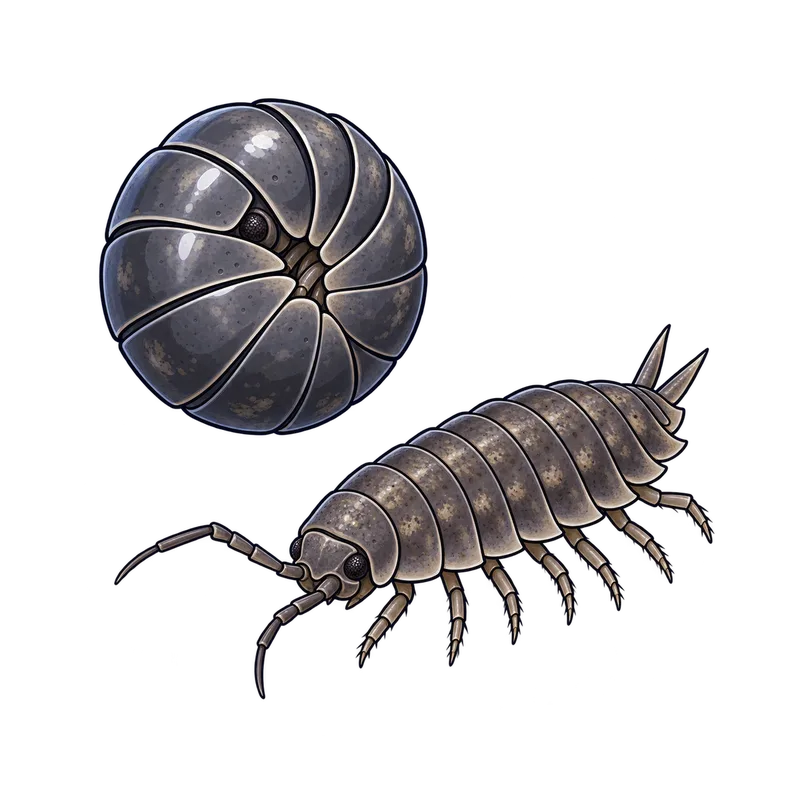
Yes, pill bugs are generally very good for your garden. These little gray creatures act as essential decomposers working around the clock to chew through tough fallen leaves and decaying wood. They turn stubborn yard waste into finer organic particles to cycle vital nutrients back into the dirt.
What is actually going on
You are kneeling in the garden on a warm spring morning, pulling back a thick layer of damp hardwood mulch from around your tomato plants to check the soil moisture. Suddenly, a dozen little gray, armored creatures scramble away, and a few curl instantly into perfect little metallic balls. You might wonder if these roly-polies are about to eat your prize seedlings down to the roots and ruin your whole harvest.
To give you the short answer, pill bugs are generally very good for your garden. In fact, they are working for you around the clock as part of an unpaid, nocturnal composting crew. While you are sleeping, these little creatures chew through tough fallen leaves, decaying wood, and organic debris at the soil level. They act as essential decomposers, turning stubborn yard waste into finer organic particles and helping cycle vital nutrients back into the dirt where your plants can actually use them.
The trouble starts only when outdoor weather shifts dramatically. If you get a week of relentless, torrential rain, waterlogged soil forces these land-dwelling crustaceans to move upward in search of air. Conversely, if a brutal summer drought bakes your flowerbeds dry, they have to wander off in search of humidity. That search is usually what brings them across your patio and through a tiny gap into your basement.
Once they cross your threshold, they are completely out of their element. People often worry that finding a few pill bugs inside means something structural is rotting or that an infestation is brewing in the living room. But indoor air is far too dry for them. Lacking the waxy outer layer that protects true insects from drying out, indoor pill bugs lose body moisture rapidly and typically die within hours or days. They do not bite, they do not sting, they do not carry diseases, and they cannot chew through your drywall, furniture, or framing timber.
How to tell for sure
Before you decide whether to welcome them or shoo them away, it helps to know what you are actually looking at, because not every little crawling gray bug in the garden is a pill bug. Taxonomically speaking, these creatures are not true insects at all. They are terrestrial crustaceans, meaning they are biological cousins to marine lobsters, crabs, and shrimp. An adult has a segmented, oval exoskeleton and seven distinct pairs of legs, giving them fourteen legs in total rather than the six legs you see on typical garden beetles.
When you spot one in the flowerbed, you can usually tell whether you are dealing with a pill bug or its close relative, the sowbug, with a simple test. If you gently touch the creature and it rolls itself tightly into a neat, perfect sphere, you have a pill bug, belonging to the family that earned the beloved nickname roly-poly. If it stays flat and scurries away instead, or if you notice two tiny tail-like appendages protruding from the rear of its abdomen, you are looking at a sowbug. Both share the same general appetite for decaying plant matter, so their garden role is largely identical.
When you find them wandering indoors, identification is usually straightforward because you are seeing a stray occasional invader rather than an indoor resident. If you need to inspect the finer anatomical details, such as their jointed antennae or chitinous body plates, a simple hand lens at 10x magnification will show you everything clearly. Unless you are looking at a heavily damaged or immature specimen that requires a laboratory microscope, a quick glance at their shape and rolling behavior is usually enough to confirm their identity.
What usually comes next
The single most practical decision you can make is to stop wasting money and time on indoor pesticide sprays when you find a few stray pill bugs in the basement. Because these creatures die naturally from indoor dryness, spraying baseboards with chemicals solves nothing and introduces unnecessary products where you live. Instead of reaching for a can of bug spray, grab your household vacuum cleaner and sweep them up, then empty the canister or bag directly into an outdoor trash bin.
If you want to keep them from wandering inside in the first place, look at how your landscaping meets your home. Many people love piling thick layers of decorative wood mulch right up against their siding because it looks tidy and holds moisture for the foundation plantings. Unfortunately, that thick mulch creates a damp, saturated habitat right against the house, essentially rolling out a red carpet for every pill bug in the yard when the weather turns bad.
You can break that bridge by establishing a clear two to four foot buffer zone of bare soil, gravel, or crushed stone around your foundation wall instead of organic mulch. Combine that simple perimeter strip with a tight door sweep on your exterior doors and some basic sealing of foundation cracks, and you will cut off most indoor visits without ever touching a pesticide. Save the mulch for the garden beds out in the yard where your soil recyclers can do their actual job in peace.
When to get help
Because pill bugs are completely harmless to human health, possess no venom, and cannot damage your home, you will almost never need to call a doctor or a pest control professional over a few strays. They do not transmit human pathogens, and they are entirely non-toxic to domestic pets like dogs and cats. If you happen to have a massive accumulation of dead isopods and shed shells gathering unnoticed in a damp, unvented crawlspace, the only minor concern is that decaying organic debris and insect fragments can sometimes contribute to indoor dust allergen loads for sensitive individuals.
You should consider bringing in outside help only when these indoor sightings point to a larger structural issue rather than a simple weather migration. If you are constantly sweeping up pill bugs in a basement that smells persistently musty, or if you spot damp walls and standing water underneath your floors, you are dealing with a moisture problem. In that scenario, calling a licensed waterproofing contractor or building specialist to fix drainage flaws, correct plumbing leaks, or seal a chronic crawlspace moisture leak is the right move.
If your home faces a severe, unrelenting invasion where hundreds of pill bugs continuously penetrate your living space despite sealed doors and cleared foundation buffers, a licensed pest control professional can step in. They can perform an exterior inspection and apply targeted perimeter treatments around the lower foundation wall, adhering strictly to the safety directions and restrictions written on the product label.