
Are pill bugs dangerous?
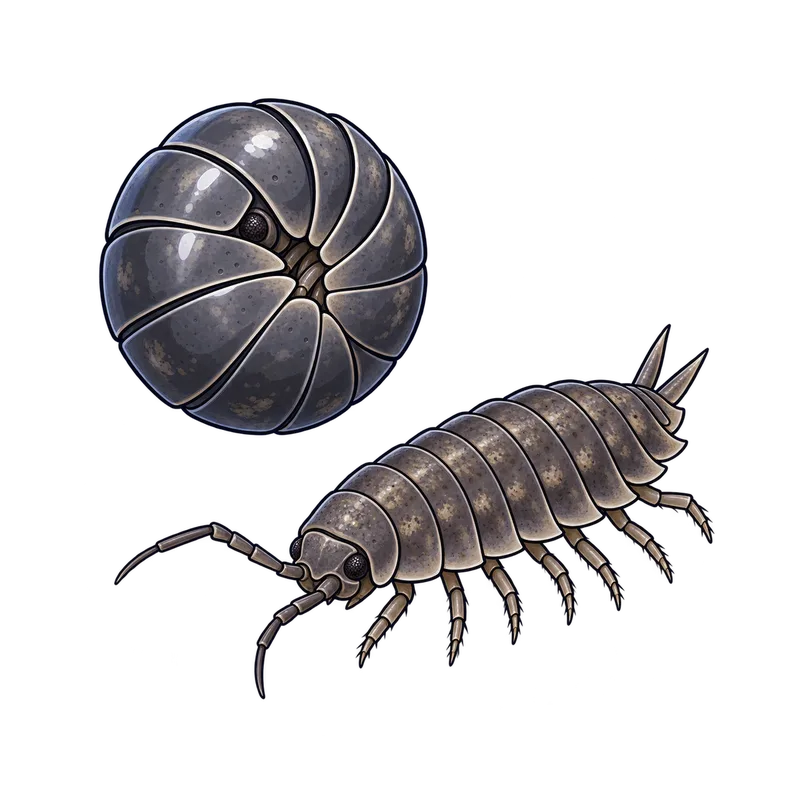
No, pill bugs are completely harmless to people, pets, and your house. These small crustaceans measuring about a quarter of an inch long do not bite, sting, or carry infectious diseases, and they cannot damage your drywall or furniture.
What is actually going on
You walk down to the basement on a rainy Tuesday morning to grab a spare lightbulb, and there, creeping sluggishly across the concrete floor, is a small, slate-gray creature that looks like a miniature armadillo. Naturally, you might wonder if you are about to deal with an infestation, or worse, something that can bite or wreck your home. Are pill bugs dangerous?
The short answer is no. Pill bugs and their close relatives, sowbugs, are completely harmless to people, pets, and your house. They will not chew through your drywall, raid your pantry, or damage your furniture. They do not bite, pinch, or sting, and they do not carry infectious diseases.
To understand why they are chilling in your basement, it helps to look at what they actually are. They are not insects at all. Instead, they are land-dwelling crustaceans, making them much closer cousins to crabs and lobsters than to ants or beetles. Because they breathe through gill-like structures, they need a high level of moisture to survive. When heavy rain saturates the soil outside, or when a summer drought dries out their usual hiding spots under rocks and mulch, they start wandering. They slip inside through tiny gaps under doors or unsealed foundation cracks simply looking for a damp place to stay.
Once they get indoors, though, they are in trouble. Your house is simply too dry for them. Pill bugs cannot reproduce, build nests, or establish permanent populations inside normal living spaces. They lack the mouthparts to chew through sound structural wood. If you leave them alone, they will generally dehydrate and die within a day or two.
How to tell for sure
Before worrying about what to do, it pays to confirm what is actually crawling across your floor. Pill bugs, often called roly-polies, usually measure about a quarter of an inch long and have segmented, oval-shaped bodies ranging from gray to brown. They possess fourteen legs, which separates them right away from typical household insects that only have six.
You can usually tell a pill bug apart from a sowbug by how it reacts when you nudge it with a piece of paper. Pill bugs get their nickname from their ability to roll themselves into a tight, spherical ball when disturbed. Sowbugs, which look remarkably similar and share the same harmless habits, cannot roll up into a ball. If you look closely at the rear end of a sowbug, you will usually spot two small, tail-like appendages that they use to absorb water from damp surfaces.
People frequently confuse these crustaceans with property-damaging pests like termites or carpenter ants, but the physical evidence tells a different story. If you find a few of them scattered across a damp basement floor, a garage, or a crawl space, you are usually looking at weather-driven wanderers rather than a destructive colony. Finding one indoors acts like a natural moisture sensor, pointing out that an exterior seal has worn out or that a corner of the basement is holding onto too much humidity.
What usually comes next
Since these creatures are essentially harmless and cannot live long indoors, your main decision is how to handle the ones you see and how to stop more from wandering inside. You do not need to call an exterminator or reach for heavy indoor pesticides. Instead, your best move is to focus on physical exclusion and moisture control around the perimeter of your home.
The most practical step you can take today is to grab your vacuum cleaner and sweep up any stragglers you find indoors. Once you finish vacuuming, immediately empty the canister or remove the vacuum bag, seal it tightly in a plastic trash bag, and toss it into an outdoor garbage bin. Leaving dead bugs to accumulate in a vacuum bag or a dark corner can eventually attract secondary scavengers that feed on dead organic matter.
Beyond indoor cleanup, look outside rather than inside. Walk around your foundation and check whether heavy mulch, damp leaf litter, or rotting wood is piled directly against the walls. Pulling that organic debris back by a few feet creates a dry barrier that discourages these creatures from hanging out near your entry points. Sealing obvious gaps beneath doors with new weather stripping or closing up visible foundation cracks with caulk will usually put a permanent stop to their uninvited visits.
When to get help
While pill bugs themselves pose no direct threat, their presence can sometimes point to a larger household issue that requires outside assistance. If you notice a massive, recurring wave of live bugs day after day, it usually serves as a warning sign of chronic water intrusion, a hidden plumbing leak, or severe structural moisture problems in a crawl space or basement. When non-chemical fixes and basic sealing fail to stop a persistent invasion, bringing in a licensed pest control professional can help identify where moisture is entering your structure.
On the health side, finding a few dead bugs does not call for medical attention, but large accumulations of dead arthropods in hidden wall voids or damp basements can sometimes trigger allergic reactions or aggravate asthma in sensitive individuals through airborne dust and shed skins. If anyone in your household experiences unexplained respiratory distress, severe allergic symptoms, or persistent skin reactions that you cannot identify, consult a qualified clinician or an urgent care medical service. Never try to diagnose a medical symptom or a skin mark by assuming it came from a specific pest, as visual inspection alone cannot determine the cause of a reaction.