
What are pill bugs?
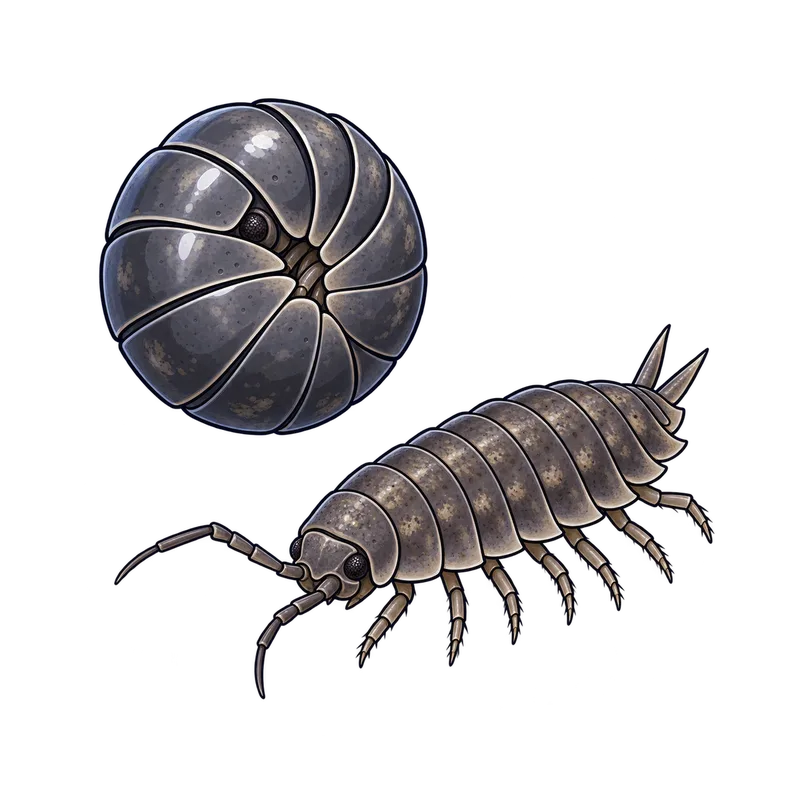
Pill bugs are small terrestrial crustaceans measuring about a quarter of an inch long with a segmented gray-to-brown exoskeleton and fourteen jointed legs. They are completely harmless to humans and homes because they cannot bite or eat building materials. When outdoor weather gets too extreme, these land-bound creatures accidentally wander inside seeking moisture.
What is actually going on
You are walking across the basement floor in your socks on a Tuesday morning, and you spot a little gray, armored ball sitting near the laundry basket. You nudge it with your toe, and it slowly unfurls and begins to crawl toward the dark corner under the water heater. If you grew up calling them roly-polies or doodle bugs, finding one indoors might bring back childhood memories of poking them in the yard. But seeing them inside your house usually brings up a different question: what are these things, and how did they get in here?
Pill bugs are small terrestrial crustaceans, meaning they are much more closely related to lobsters, crabs, and shrimp than they are to true insects. That surprises most people who assume any small creeping thing with legs is an insect. An adult pill bug measures about a quarter of an inch long, wears a segmented gray-to-brown exoskeleton that looks like a tiny medieval breastplate, and marches around on fourteen jointed legs split into seven pairs.
They live outdoors in damp, hidden places like landscape mulch, compost piles, rotting logs, and under flat stones, where they act as nature's quiet cleanup crew by feeding on decaying plant material. They are classified as occasional invaders, which is pest control shorthand for outdoor creatures that accidentally wander inside structures seeking shelter or moisture when the weather outside gets too extreme.
The most important thing to know about finding them indoors is that they are entirely harmless. Because their bodies rely on gills and thin cuticles that need constant moisture to breathe and stay alive, they cannot survive long in the dry, climate-controlled air of a standard home. They do not bite, they do not sting, they carry no human diseases, and they cannot eat your clothes, wood framing, or stored food. When they wander inside your house, they are essentially land-bound sea creatures that took a wrong turn, and they usually die of thirst within a short time.
If you are trying to figure out what is crawling across your baseboard, you are usually looking at either a pill bug or its very close cousin, the sowbug. Both belong to the woodlouse family, but they have one glaring behavioral difference that gives them away instantly. When you gently prod a pill bug with a pencil or a finger, it tucks its head and legs inward and rolls up into a tight, hard sphere with no gaps. A sowbug will usually scramble away as fast as its legs can carry it and stays completely flat, refusing to ball up.
If you grab a hand lens and look a bit closer, you can spot another detail. Sowbugs usually feature two prominent, tail-like appendages sticking out of their rear end, which they use to siphon water, while pill bugs lack those tail pieces entirely. Both pests share that familiar oval shape and dull gray or brown coloring, measuring around a quarter of an inch in length.
You usually find them near ground-level entry points, such as unfinished basement floors, crawl spaces, utility closets, or right under the bathroom sink. If you are spotting dozens of them alive or dead near an exterior door, it is usually a sign that you have a thick bed of damp mulch or leaf litter pressing right up against your exterior foundation wall, giving them an easy highway indoors.
How to tell for sure
Since these little critters are practically doomed the second they cross your threshold, your main job is deciding how to deal with the stragglers and whether you need to fix the conditions that let them in. You do not need to rush out for chemical bug sprays or aerosol foggers, which tend to miss where pests actually hide and just leave unnecessary residues on your floors. Instead, your best practical move is to grab the vacuum, suck up the wanderers, and promptly seal the vacuum bag inside a plastic trash bag before tossing it into an outdoor bin.
Once the indoor cleanup is finished, you can shift your attention outside to stop them from coming back. The single most effective physical adjustment you can make is to pull back landscape mulch, wood chips, and leaf piles to create a dry, plant-free barrier strip measuring two to four feet wide directly against your home foundation. Filling that strip with gravel, crushed stone, or bare soil cuts off their favorite damp hiding spots right where your walls meet the ground.
You can also block their indoor entryways by inspecting ground-level exterior doors and installing durable, tight-fitting door sweeps, while sealing any large cracks in your foundation walls with quality caulk or expandable foam. Fixing clogged gutters and adjusting downspouts to carry rainwater well away from the house will keep the perimeter soil from turning into a soggy sponge that attracts them in the first place.
What usually comes next
Pill bugs are among the lowest-risk organisms you will ever encounter around a home, meaning they never require medical attention or a call to poison control. They cannot pierce human skin, they do not carry pathogens, and they pose zero threat to your health or structural integrity. However, there are moments when their presence points to a larger issue that calls for outside help. If you keep finding large numbers of live pill bugs indoors day after day, it usually means your basement or crawl space is suffering from chronic water seepage, standing water, or relative humidity levels consistently pushing above seventy percent.
When to get help
When structural dampness gets out of hand, it invites other moisture-loving pests and can trigger mold growth that affects your indoor air quality. If foundation entry points are difficult for you to safely reach, or if persistent water drainage problems require heavy grading adjustments around your property, you should consult a licensed pest control professional, a drainage contractor, or a structural specialist to get the moisture under control for good.