
What do pill bugs eat?
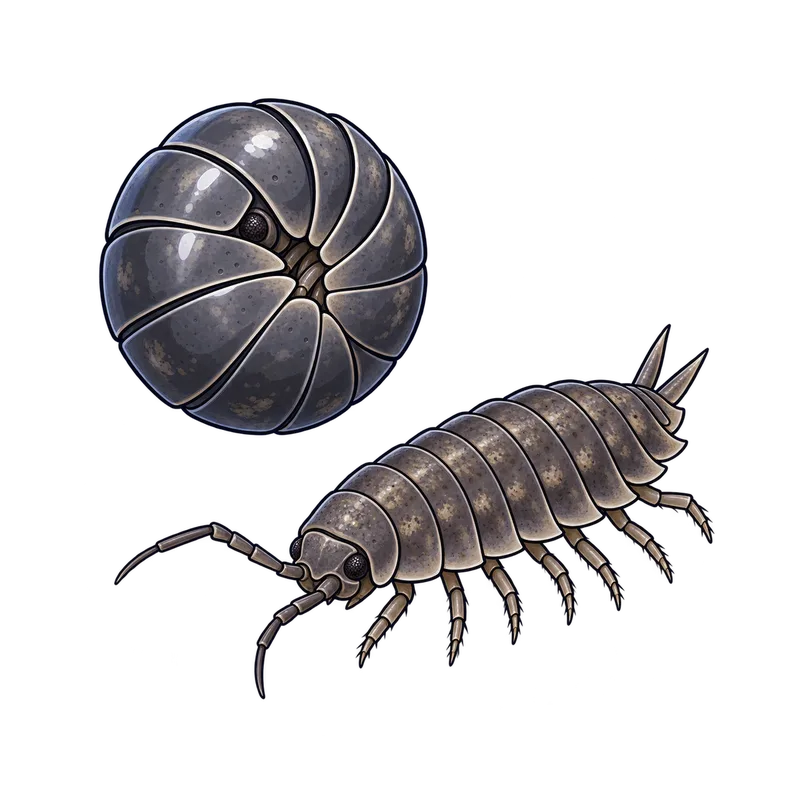
Pill bugs eat decaying plant matter, rotting leaf litter, decomposing wood, and organic mulch. Their mouthparts are built strictly for scraping soft and moist material, so they cannot digest drywall, furniture, or pantry staples. They are strictly outdoor creatures that do not feed or reproduce inside human living spaces.
What is actually going on
You are walking down to the basement on a Tuesday morning to switch a load of laundry, and you spot a few little gray, armored creatures curled up near the base of the washing machine. You might wonder how they got there, what they are looking for, and whether they are chewing through your belongings while you sleep. If you are imagining them munching on your favorite wool sweater or nibbling away at the baseboards, you can breathe a sigh of relief because that is not how they operate.
Pill bugs, often called roly-polies or woodlice depending on where you grew up, are strictly outdoor creatures whose natural menu consists of decaying plant matter, rotting leaf litter, decomposing wood, and organic mulch. They spend their days doing the honest work of recycling nutrients in damp topsoil. When you find them inside your home, they are essentially accidental tourists. They did not come inside to feed on your house, and they certainly cannot digest your drywall, furniture, or pantry staples.
People often forget that these creatures are not actually insects at all, but terrestrial crustaceans. That makes them close cousins to shrimp, crabs, and lobsters, which explains why they rely so heavily on moisture. They breathe through primitive, gill-like structures tucked underneath their bodies, and those structures need constant dampness to function. When the weather outside turns too wet from heavy seasonal rains or too dry from a summer drought, these little land-bound lobsters wander indoors looking for humidity.
Once they cross your threshold, they are on borrowed time. Standard indoor air is far too dry for them, and because homes lack the rotting vegetation they need to survive, they cannot feed or reproduce inside human living spaces. They usually wander around aimlessly until they dry out and die. You are not dealing with a breeding colony or an active infestation, but rather a weather-driven migration that took a wrong turn at your foundation.
Home invasions by pill bugs are driven by microclimatic shifts and exterior habitat conditions rather than indoor food attractants. When heavy organic bark mulch, leaf piles, compost, and woodpiles sit directly adjacent to foundation walls, they create dense outdoor populations. Weather extremes such as heavy seasonal rains saturating soil, spring flooding, or extended droughts force isopods to migrate out of saturated or drying outdoor harborage in search of stable humidity. They enter structures through foundation cracks, weep screeds, gaps under exterior doors, and basement window frames. Once inside, they wander randomly into basements, crawl spaces, utility rooms, and ground-floor bathrooms.
How to tell for sure
Before you worry about what is crawling across your floor, it helps to know what you are looking at. Pill bugs and their close relatives, sowbugs, measure roughly a quarter of an inch long and usually sport a segmented, gray-to-brown armored exoskeleton with seven pairs of legs. Despite sharing a similar look, you can usually tell them apart with a quick visual check. If you gently nudge one and it curls up into a tight, perfect little ball resembling a miniature armadillo, you have a pill bug. If it does not roll into a ball and you notice two small, tail-like appendages sticking out of its rear end, you are looking at a sowbug. You do not need any fancy equipment to make this distinction, as the naked eye is usually enough at close range. If you happen to grab a magnifying lens to look closer, you will easily spot the distinct body segments, antennae, and walking legs.
You will not find these creatures chewing holes in your clothes or gnawing on your timber framing. If you discover damage to wood or textiles, you are usually looking at the handiwork of entirely different household pests, such as termites, carpet beetles, or silverfish. Isopods simply lack the biology to consume dry, sound materials. Their mouthparts are built strictly for scraping soft, moist, decaying matter.
What usually comes next
Since these creatures cannot survive indoors for long and pose zero threat to your home or your health, your main decision comes down to how you want to clean them up. Instead of reaching for indoor chemical sprays or bug bombs, which are both unnecessary and ineffective against occasional visitors hiding in wall voids, the most sensible approach is simple physical removal. Grab your vacuum cleaner and sweep them up. Once you finish vacuuming, take the bag straight outside, seal it inside a plastic trash bag, and drop it in your outdoor bin. This keeps any stray dust or decaying debris out of your living space and finishes the job cleanly.
To keep more of them from wandering inside next week, look outside rather than inside. You can stop most indoor visits by creating a dry, clear barrier right where your home meets the earth. Pull back heavy organic mulch, leaf piles, and woodpiles so they sit a few feet away from your foundation walls. Sealing up obvious gaps around foundation cracks and making sure your doors have tight-fitting sweeps will finish off the job without needing a drop of indoor pesticide. Pesticide product label directions govern all chemical applications by law, and exterior perimeter barrier sprays applied by licensed pesticide applicators can intercept heavy outdoor migrations, but chemical treatments indoors are unnecessary and ineffective compared to drying and exclusion.
When to get help
Pill bugs are completely harmless to people and pets because they do not bite, pinch, sting, or carry diseases. However, there are a few moments when you should step back and hand the situation over to someone else. If you find large accumulations of dead arthropods piling up in your basement or crawl spaces, keep in mind that those dead shells can occasionally attract secondary scavenger pests, or the dry fragmented dust can trigger asthma and allergies in sensitive household members. More importantly, if you keep finding large numbers of live isopods indoors week after week despite sealing your gaps and clearing away outdoor mulch, you usually have a hidden moisture leak or a major structural breach that needs a professional inspection to track down.
Finally, if anyone in your household reports a skin rash, a mysterious mark, or an allergic reaction, do not assume it came from a pill bug. Isopods do not bite humans, so you should consult a licensed healthcare clinician, urgent care facility, or poison control center to figure out the actual cause.