
Why are sowbugs in the house?
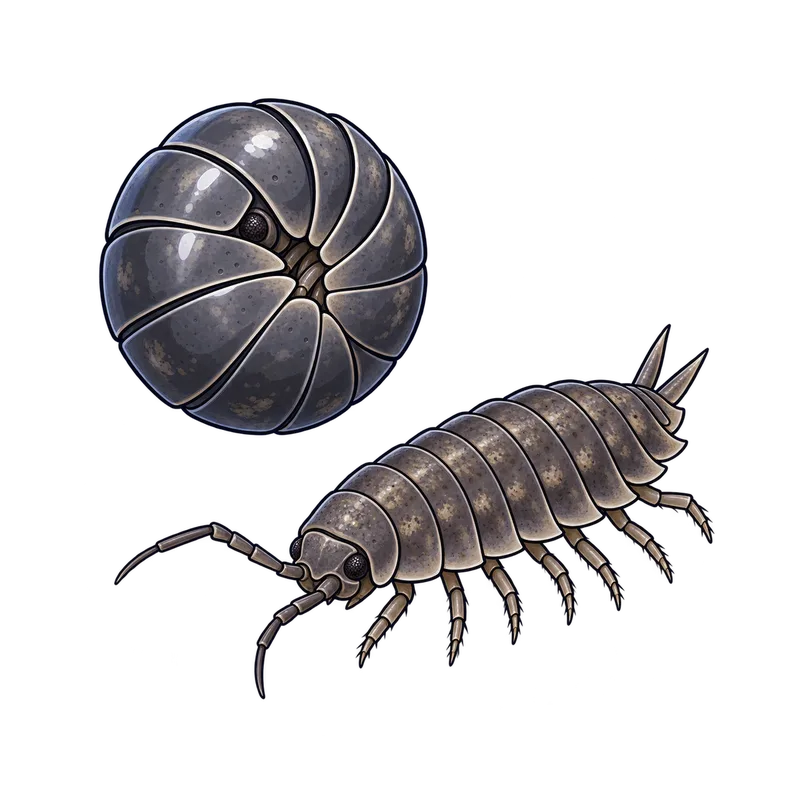
Sowbugs are in the house because scorching summer droughts or heavy rainstorms drive them away from dry or flooded soil outside. These quarter inch long terrestrial crustaceans slip inside through gaps under exterior doors or foundation cracks to seek moisture, but they usually dry out and die within a day or two.
What is actually going on
You walk down to the basement on a Tuesday evening to grab a spare roll of paper towels, flick on the light, and spot a small gray armor-plated creature creeping across the concrete floor. Before you can even grab a tissue, you notice another one near the drain, and maybe a few more curled up and motionless by the laundry tub. Naturally, your mind jumps to the worst-case scenario. Are they eating your drywall? Are they laying eggs in the baseboards?
The short answer is that sowbugs are not moving in because they like your house. They are basically lost mariners. These creatures are actually terrestrial crustaceans, meaning they are far more closely related to crabs and lobsters than they are to true household insects like ants or roaches. They breathe through delicate, gill-like structures on their bellies that need constant moisture to function. When the weather outside turns hostile, whether it is a scorching summer drought baking the garden mulch or a heavy rainstorm flooding their underground tunnels, they panic and crawl away from the dry or flooded soil.
They slip inside at ground level through tiny gaps under exterior doors, foundation cracks, or basement window wells. Once they cross your threshold, they head straight for the coolest, dampest spot they can find. But standard indoor air is far too dry for them, and your house lacks the rotting plant matter they rely on for food. They cannot reproduce or set up housekeeping inside your living spaces. The ones you find wandering around are usually trapped in an indoor desert, and they will typically dry out and die within a day or two without ever touching your wooden framing, furniture, or food stores.
So, finding a few of these little armored tanks on the basement floor is not an indoor infestation at all. It is simply a natural humidity alarm. They are telling you that your perimeter soil is holding too much water or that a gap somewhere near the foundation is letting the outside world creep right under your door.
How to tell for sure
People often mix these up with every other small crawler in the basement, but a few quick checks will tell you exactly what you are looking at. Sowbugs usually measure about a quarter of an inch long, featuring a flattened, oval, gray to dark brown body made of overlapping plates that look like a tiny medieval breastplate. If you count their legs, you will usually find seven pairs, giving them fourteen legs in total, which immediately sets them apart from typical six-legged insects.
You might also hear people call them roly-polies or pillbugs, but there is a clear distinction worth making. True pillbugs can roll themselves into a tight, perfect sphere when you poke them. Sowbugs usually cannot do that. If you look closely at the rear end of a sowbug, you will usually spot two small, tube-like tail appendages sticking out from the back of the abdomen. Pillbugs lack those protruding rear bits.
You usually do not need a magnifying glass to see these differences, but a basic hand lens makes those tail appendages obvious. What you will not find on either of them are biting mouthparts or stingers. They do not bite people, they do not sting pets, and they do not carry diseases. If you accidentally step on one, it makes a minor mess, but it poses zero health threat to your household.
What usually comes next
Since these creatures are dying travelers rather than thriving invaders, spraying harsh insecticides across your baseboards is usually a waste of time and effort. Your most practical move is to stop them at the boundary line by cutting off their access to moisture right outside your foundation. Walk the perimeter of your house and take a close look at what is touching your exterior walls.
If you have thick layers of organic mulch, damp leaf piles, or stacked firewood sitting directly against the siding, you are essentially rolling out a red carpet for every isopod within twenty feet. Pull that mulch and debris back by a few feet to create a dry barrier of bare soil or gravel right against the foundation. At the same time, check your downspouts and make sure water is draining far away from the house instead of pooling right where the walls meet the ground.
When you do spot a stray sowbug wandering across the basement floor, the fastest way to deal with it is simply to sweep it up or vacuum it. Just make sure you empty the vacuum bag or canister into an outdoor trash bin right afterward so you do not leave a collection of organic debris sitting inside your machine to attract other scavengers. Fixing the moisture balance outside and sealing up large gaps around exterior doors will usually stop them from showing up inside altogether.
When to get help
Because sowbugs cannot damage your home, bite your skin, or transmit pathogens, they rarely warrant an emergency call to an exterminator. However, their presence can point to bigger building issues that do require outside expertise. If you have sealed your foundation cracks and cleared your exterior mulch, but you still find a steady stream of isopods marching into the basement, you might be dealing with a hidden plumbing leak or persistent structural moisture seepage that requires a contractor or a plumber to track down.
If you are seeing vast numbers of them pouring in after a severe regional flood, you may want to consult a certified pest management professional about setting up an exterior perimeter barrier treatment to keep the flood refugees outside. Just remember that a professional should focus on the outdoor perimeter, as spraying chemicals inside a house for outdoor stragglers is generally unnecessary.
Finally, do not let anyone blame a skin rash, unexplained bite mark, or allergic reaction on a sowbug. These creatures lack the anatomy to bite humans. If anyone in your household is dealing with persistent skin lesions or unexpected medical symptoms, skip the pest control guides entirely and reach out to a qualified clinician, an urgent care center, or your local poison control center for proper guidance.