
What do sowbugs eat?
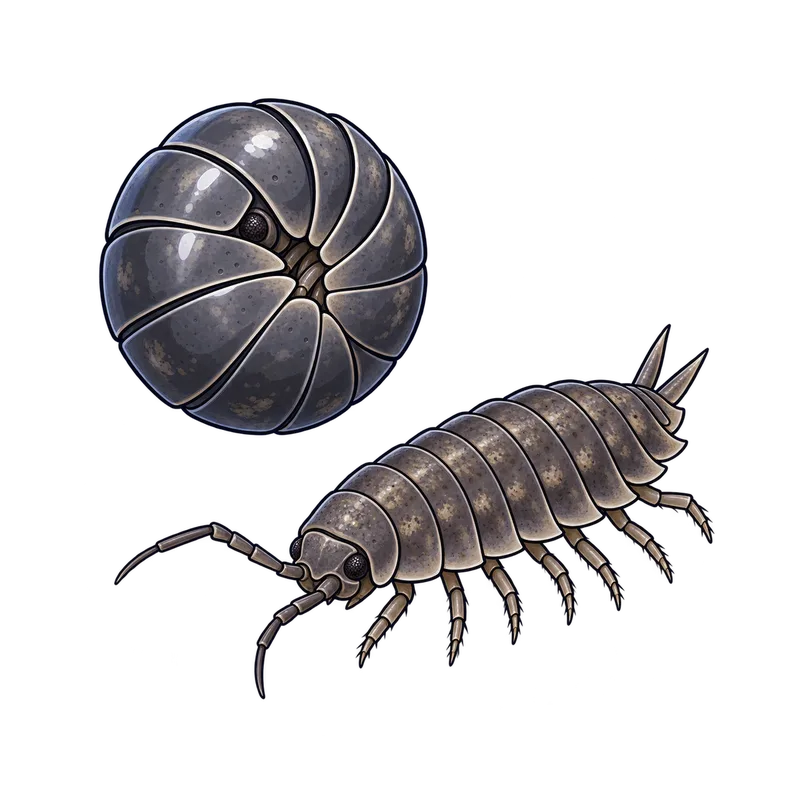
Sowbugs eat decaying plant matter, rotting wood, fallen leaf litter, and decomposing garden mulch. Outdoors, these land crustaceans act as nature is cleanup crew by breaking down dead organic material into rich humus for the soil. They do not eat wood, clothes, or food when they wander into homes by accident.
What is actually going on
You walk down to the basement on a Tuesday morning to swap out a load of laundry and notice a small, gray, segmented creature scuttling across the cold concrete floor. Naturally, you might wonder if something is chewing through your baseboards or laying waste to the boxes of old books in the corner. But if that little traveler is a sowbug, you can breathe a sigh of relief. It is not eating your house, your clothes, or your pantry staples.
Outdoors, sowbugs function as nature is own cleanup crew. Their diet consists almost entirely of decaying plant matter, rotting wood, fallen leaf litter, and decomposing garden mulch. They are detritivores, meaning they thrive by breaking down dead organic material into rich, microbial humus for the soil. Think of them as tiny land crabs whose entire purpose in life is to chew up rotting vegetation in damp, hidden places like beneath a pile of wet leaves or under a rotting log in rumpled shade.
When they wander inside human living spaces, it is usually by accident. They are not looking for a midnight snack of drywall or carpet fibers. Instead, they are looking for moisture. Sowbugs are actually terrestrial crustaceans, meaning they are much more closely related to lobsters and shrimp than they are to household insects like ants or beetles. Because their bodies rely on high ambient moisture to breathe and survive, dry indoor air is lethal to them. An accidental invader that makes it past your basement door will typically dry out and die within a day or two without ever touching a thing.
How to tell for sure
Before you start worrying about what is crawling around, make sure you are actually looking at a sowbug and not something else. Sowbugs are usually about a quarter of an inch long, oval-shaped, and colored in shades of gray or brown. They have seven pairs of articulated legs, which immediately separates them from standard six-legged insects.
People often confuse sowbugs with their close cousins, pillbugs, but there is an easy way to tell them apart. Sowbugs have two prominent, tail-like appendages called uropods sticking out from their rear end. Pillbugs, which people often call roly-polies, lack those tail tubes and can curl themselves into a tight, armored sphere when disturbed. Sowbugs usually cannot roll up into a ball.
If you find them indoors, they are usually concentrated in damp, low-lying areas like unfinished basements, crawlspaces, or right around floor-level doorways. You will not find them chewing on sound structural timber or dry paper in a normal, climate-controlled room. The only rare exception happens in unconditioned, chronically damp archives or storage rooms where relative humidity stays above 70%, allowing mold to grow on paper. In that specific scenario, woodlice might graze on the damp, moldy surface, but that is a far cry from a typical residential living room.
What usually comes next
The most sensible move when you spot a sowbug inside is to view it as a plumbing or weatherproofing hint rather than a reason to call an exterminator. Because these animals cannot reproduce or stay alive for long inside a dry house, spraying heavy chemical poisons indoors is a complete waste of time. Instead of reaching for a bug spray, simply vacuum up the stray visitors and toss the bag into an outdoor bin.
Your real attention should focus right outside your foundation walls. Sowbugs live where they find moisture and rotting organic trash, so your best defense is a clean perimeter. Walk around the exterior of your house and check the dirt touching your foundation. If you have thick beds of wood mulch or piles of wet leaves pressed right against your siding, you are practically rolling out the red carpet for them.
Pull that organic mulch back to create a dry buffer zone filled with gravel or stones instead. Check your basement door sweeps, seal any visible gaps in the foundation with caulk, and make sure your gutters direct rainwater far away from the house. Once you cut off their outdoor water sources and block their entry points, the indoor sightings usually stop by themselves.
When to get help
Finding the occasional sowbug on a damp basement floor is just part of living on earth, but there are moments when the situation calls for outside expertise. If you find massive numbers of them day after day despite sealing cracks and clearing away mulch, you might have a hidden moisture problem that requires a professional touch. In that scenario, bringing in a waterproofing contractor or a structural specialist can help solve chronic drainage issues, leaky foundation walls, or flooded crawlspace areas.
If those indoor migrations keep happening and you simply cannot find where they are getting in, a licensed pest management professional can apply a targeted exterior barrier treatment around your foundation. Keep in mind that sowbugs do not bite, sting, or carry human diseases, so they do not pose a direct medical risk. However, if thousands of them die off inside closed wall voids or unvented crawlspaces, their accumulated remains can occasionally attract secondary scavenger pests or trigger respiratory irritation for people with severe allergies. If you notice unusual secondary bugs moving in or experience persistent indoor air quality issues related to damp subfloor areas, consult a qualified specialist to get the moisture under control.