
Do pill bugs eat plants?
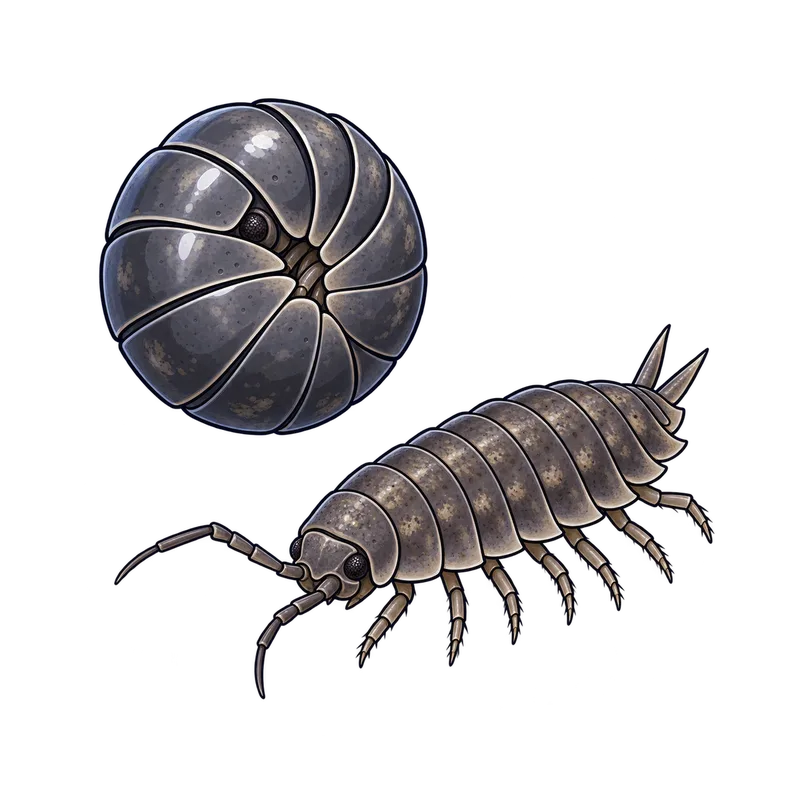
No, pill bugs do not eat healthy, living plants, as they prefer consuming dead and rotting plant debris. These slate-gray creatures measure around a quarter of an inch long and act as opportunistic scavengers on already dying vegetation.
What is actually going on
You are out in the garden on a warm Saturday morning, lifting an old paving stone or shifting a soggy bag of potting mix, and a dozen little slate-gray creatures scramble for cover, some rolling instantly into tight little spheres. Naturally, you wonder what they are doing to your prized hostas or tender young tomato starts. Do pill bugs actually eat plants, or are they just hanging out where it is damp?
The short answer is no, pill bugs do not eat healthy, living plants. They are detritivores, which is just a technical way of saying they prefer their meals dead, rotting, and well on the way to decomposition. Think of them as miniature, land-dwelling cousins of marine lobsters or crabs. Because they evolved from aquatic crustaceans, they kept gill-like respiratory organs that need constant moisture to function. That is why you find them under damp logs, wet mulch, and decaying leaf litter outdoors, munching on fungi and dead plant debris.
You might wonder why you sometimes spot them huddled around the base of a garden plant that looks a bit chewed up. The reality is that pill bugs are opportunistic scavengers. If a plant is already dying from fungal disease, root rot, or physical damage, these creatures might graze on the decaying tissue alongside other soil microbes. But they lack the inclination and the mouthparts to attack healthy, thriving vegetation.
When you find them inside your house, usually crawling sluggishly across a basement floor or trapped in a bathtub, they are not there to chew your baseboards, ruin your wallpaper, or snack on your indoor potted ferns. They wandered in because of heavy rain outside or a dry spell that forced them to hunt for moisture. Because modern indoor air is far too dry for them, they cannot survive long inside anyway. They dry out and die within hours, acting more like tiny, accidental humidity gauges than destructive invaders.
How to tell for sure
People often use names like roly-poly, potato bug, or woodlouse interchangeably, but a quick look usually reveals who you are dealing with. In North America, the two most common creatures you will find under your garden pots are pill bugs and sowbugs, and they look quite similar at first glance. Both measure around a quarter of an inch long, feature flat or slightly rounded gray-to-brown bodies, and possess seven pairs of jointed legs. That is fourteen legs total, which immediately separates them from true insects, since true insects only have six legs.
The easiest way to tell them apart involves a simple physical test. Pick one up gently or nudge it with a twig. A true pill bug will roll itself tightly into a neat, smooth little sphere, which is where the classic nickname roly-poly comes from. Sowbugs, on the other hand, cannot pull off this trick. If you inspect the rear end of a sowbug, you will usually spot two small, tail-like appendages called uropods sticking out from the back of its abdomen. Pill bugs lack those visible tail bits entirely.
If you are trying to figure out whether these critters are hanging around your flowerbeds or basement, you can usually rely on a simple visual check with the naked eye. You do not need any special magnification to count legs or look for tail spikes. However, if you are dealing with very young nymphs or unusual regional variations, an entomologist might need to look at them under magnification or preserve them in alcohol to confirm the exact species. For most homeowners, simply knowing whether the creature rolls into a ball is enough to sort out what is crawling across the patio.
What usually comes next
Since pill bugs are not munching on your healthy garden or destroying your house, your best move is to focus entirely on moisture management and simple physical barriers rather than reaching for harsh chemical sprays. If you are finding them indoors, it usually means there is a moisture gradient drawing them toward a gap in your foundation or an unsealed doorway. Instead of spraying pesticide around your living room, look outside to see where water is pooling or where organic matter is touching your siding.
The most effective practical step you can take is to create an inorganic buffer zone directly against your home foundation. Pull back the decorative wood chips, bark mulch, and thick layers of decaying leaves for a width of two to four feet, and replace that organic debris with clean gravel, crushed stone, or river rock. Wood mulch holds moisture like a sponge and gives pill bugs a luxury hotel right next to your weep holes and foundation cracks. Once you trade that mulch for dry stone, the area stops appealing to moisture-seeking pests, and they naturally move further out into the yard.
You should also check your gutters, downspouts, and outdoor faucets to make sure water is draining well away from the house walls. Seal up any obvious gaps around utility pipes or foundation cracks with a bit of exterior caulk or weather-stripping. If a stray pill bug or sowbug happens to make it across the threshold and onto your basement floor, your most efficient tool is simply a vacuum cleaner. Vacuum them up, take the bag outside, and empty it into an outdoor trash bin. There is no reason to treat indoor areas with broad chemical applications when fixing the outdoor moisture source solves the problem at the root.
When to get help
Pill bugs and sowbugs present very low risks. They do not bite, they do not sting, they carry no venom, and they do not transmit infectious diseases to humans, pets, or livestock. If you accidentally crush one on the carpet, you might find a slight smudge, but you will never have to worry about medical emergencies or toxic reactions. Finding them in your home is essentially an environmental message from your house, telling you that perimeter moisture is high or that a foundation seal has failed somewhere near the ground.
There are times, however, when you should bring in outside help. If you have sealed your foundation gaps, cleared away the mulch, and fixed your drainage, but you are still dealing with massive, unrelenting migrations of isopods flooding your ground-floor rooms every time it rains, call a licensed pest management professional or a structural contractor. Persistent indoor invasions often point to deeper drainage problems, poor yard grading, or hidden sub-floor humidity issues that require heavy equipment or specialized building repairs to resolve.
When structural corrections are not enough and an exterior chemical barrier treatment becomes necessary around the foundation, leave that work to a licensed applicator. A professional will know how to apply registered residual treatments safely along exterior footings and dry harborage voids without violating product labels or putting non-target wildlife at risk. Whenever you are dealing with complex grading fixes or commercial pesticide applications, turning to a qualified expert ensures the job gets done correctly and legally.