
Why are pill bugs in the house?
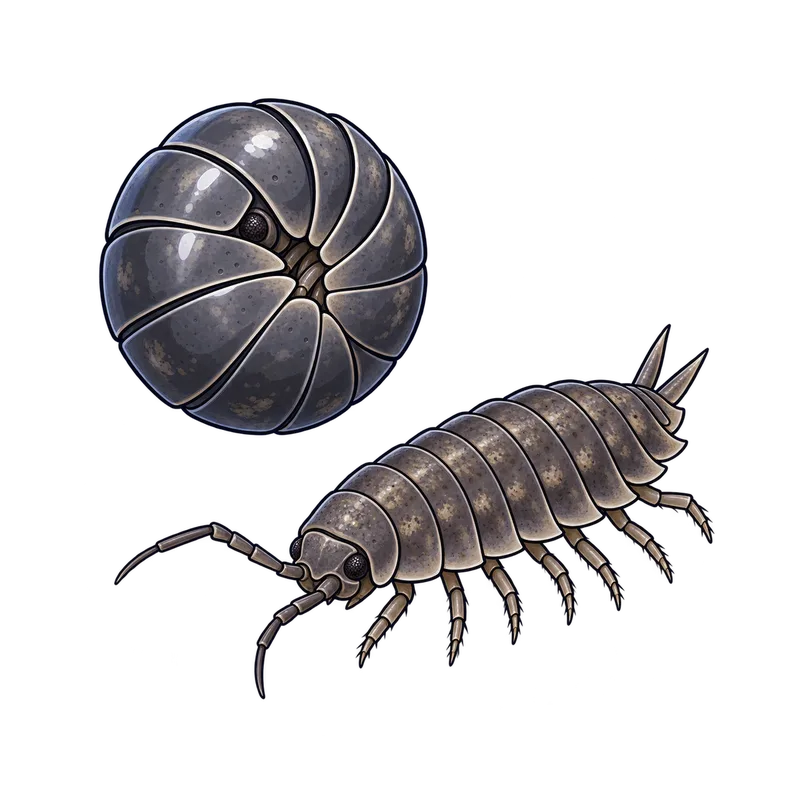
Pill bugs enter houses because they are outdoor land-dwelling crustaceans searching for moisture when heavy rain or heat waves make their natural environment hostile. These roughly quarter-inch, slate-gray creatures slip through foundation gaps, and finding them indoors depends on them escaping outdoor weather extremes or hitching a ride on a potted plant.
What is actually going on
You are walking across the basement floor in your socks on a Tuesday morning, and you spot a little armored gray blob curled up near the laundry basket. You poke it, and it rolls into a tight, perfect ball. It is a pill bug, commonly known as a roly-poly, and seeing one indoors usually makes you wonder how it managed to get past the front door.
The short answer is that pill bugs do not want to live in your house any more than you want them there. They are not indoor pests looking to nest in your drywall or raid your pantry. Instead, they are outdoor creatures, specifically land-dwelling crustaceans related to crabs and lobsters, that wandered inside by accident. They are looking for moisture, and when the weather outside goes haywire, your basement or crawl space becomes an emergency shelter.
In their natural outdoor habitat beneath rotting logs, flat stones, and thick piles of wet garden mulch, these little animals play a useful role as decomposers. They feed on decaying leaves and organic detritus. But when a heavy downpour floods their soil, or an intense summer heat wave dries out their damp hiding spots, their environment becomes hostile. They migrate outward to survive, crawling across the ground and slipping through tiny gaps in your foundation, unsealed utility penetrations, or doors with worn weather stripping.
Once they cross the threshold, though, they are in trouble. Standard indoor living quarters are far too dry for them. Unlike insects with waxy, waterproof outer shells, pill bugs breathe through delicate, gill-like structures on their undersides. They need high humidity to breathe and survive. If your house has dry air and no active plumbing leaks, any pill bug that wanders into your living room or bedroom will dry out and die within a short time. Finding them indoors usually means they made a wrong turn while searching for dampness, or they caught a ride inside on a potted plant you brought in from the patio for the winter.
People often wonder why these creatures appear in numbers during certain seasons. The migration is driven entirely by their urgent physiological need for moisture. They do not reproduce inside normal dry living spaces because their eggs and young require the same high humidity found under outdoor logs and stones. When you find them indoors, you are seeing individuals that made it through a weak point in the building envelope while escaping unfavorable outdoor extremes. Their presence is a symptom of environmental pressure outside rather than an established infestation.
How to tell for sure
People often mix up pill bugs with all sorts of small crawlers, but their identity is easy to pin down once you look closely. A typical pill bug is roughly a quarter of an inch long, featuring an oval, multi-segmented, slate-gray or brownish body. If you pick one up or nudge it lightly, a true pill bug will roll itself into a tight, spherical ball to protect its soft underside.
If the creature stays flat when you touch it and has two small, tube-like tail projections at the rear end, you are usually looking at a close relative called a sowbug. Sowbugs cannot roll up into a ball. Both of them belong to the crustacean family Isopoda, meaning they are built with seven distinct pairs of walking legs, adding up to fourteen legs in total. If you count six legs, you are looking at an insect. If you count thirty or more, you have a centipede or a millipede.
A common doubt people raise is whether these creatures are dangerous. Rest assured, pill bugs cannot bite or sting, they do not carry human diseases, and they will not chew on your clothes, your food, or your wooden framing. They lack the mouthparts to cause structural damage. If you see dozens of them crawling around indoors week after week, however, that persistent presence usually points to an underlying moisture issue. It often means you have a hidden water leak, poor yard grading that pushes water toward the foundation, or a damp, unsealed crawl space that gives them enough humidity to hang on longer than they normally would.
What usually comes next
When you spot a few pill bugs wandering across your floor, the most practical decision you can make is to ignore the urge to spray heavy chemicals inside your living spaces and focus instead on blocking their entry points. Indoor chemical sprays do very little good because the bugs are already dying of dehydration in dry indoor air.
Your best move is physical removal paired with simple environmental adjustments. Grab your vacuum cleaner and sweep up the stragglers, then immediately take the vacuum bag outside and empty it into an outdoor trash bin so they do not crawl back out. To stop new ones from getting in, walk around the outside of your house and check the perimeter. Pull back heavy wood mulch or damp leaf litter so there is a small bare strip of gravel or soil right against your foundation wall. Make sure your gutters carry rainwater well away from the house, and seal up any visible cracks in the foundation or gaps beneath exterior doors. By cutting off their outdoor hiding spots near the house and closing their pathways, you stop the migration before it reaches your living room.
When to get help
Most encounters with pill bugs are minor household nuisances that you can handle on your own with a vacuum and some outdoor cleanup. There are times, however, when bringing in outside help is the right call. If you notice massive, unstoppable waves of these creatures pouring into your home despite your best efforts at sealing gaps and managing moisture, a licensed pest control professional can apply targeted exterior perimeter treatments or help with advanced structural exclusion work, such as sealing crawl spaces or weep screeds.
If you or anyone in your household experiences unexplained skin rashes, bites, or suspected allergic reactions, remember that pill bugs are harmless and do not bite. Consult a medical clinician, urgent care clinic, or poison control center to properly diagnose skin symptoms or health concerns. Never attempt to guess the cause of a skin mark based on a pest you found nearby, and always leave specialized structural repairs or complex pesticide applications to qualified professionals who follow product label regulations down to the letter.