
Are pill bugs crustaceans?
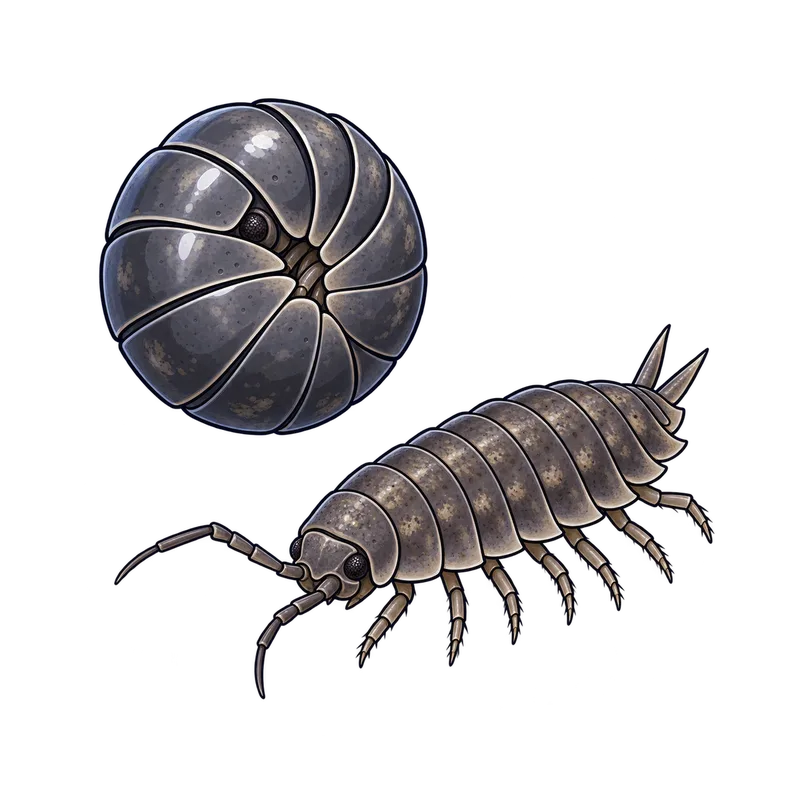
Yes, pill bugs are terrestrial crustaceans, making them much closer cousins to marine shrimp and lobsters than to true insects. These slate gray scavengers measure about one-fourth of an inch long and possess 14 legs. They breathe through gill-like structures that require constant moisture to survive.
What is actually going on
Picture a lazy Saturday afternoon in the backyard, where you decide to finally move that heavy wooden planter box that has been sitting by the back patio since last autumn. As you lift it, the damp soil underneath reveals a sudden scramble of tiny, slate-gray creatures curling up into tight, armored little spheres like miniature medieval knights. Most people call them roly-polies, woodlice, or slaters, and most assume they are some kind of beetle or bug creeping through the dirt.
To answer the main question directly, pill bugs are not insects at all. They are actually terrestrial crustaceans, making them much closer cousins to marine shrimp, crabs, and lobsters than to ants, beetles, or flies. If you have ever thought of them as backyard lobsters taking a slow stroll through your mulch, your intuition is surprisingly spot on. They belong to a specialized group of land-dwelling animals that made the evolutionary leap out of the ocean long ago, yet they still carry most of their ancient biological baggage with them.
That marine heritage explains why a pill bug turns up in your basement or laundry room and dies so quickly. Imagine a sea creature trying to survive in a sun-baked desert, and you have a fair picture of what happens when a pill bug wanders into a modern climate-controlled house. They breathe through modified, gill-like respiratory structures that require a constant film of moisture to pull oxygen from the air. When they cross your living room floor, dry indoor air robs them of that essential moisture almost instantly. They are obligate moisture seekers, meaning they live and die by the presence of dampness.
How to tell for sure
You do not need a laboratory microscope to figure out what is crawling across your basement floor, though a basic 10x magnification lens can make the details satisfyingly clear. Adult pill bugs usually measure about one-fourth of an inch long and sport a uniform slate-gray, dark gray, or grayish-brown color. If you look closely at their segmented, flattened oval bodies, you will notice they possess 7 distinct pairs of walking legs, giving them 14 legs in total. True insects stop at 6 legs and often have wings, but pill bugs have neither wings nor the typical 3-part insect body plan.
You might also wonder how to separate a pill bug from its very close relative, the sowbug, since people tend to use both names interchangeably. While both are land-dwelling crustaceans sharing the same damp hiding spots, pill bugs usually have the distinctive ability to roll themselves into a tight, unbroken sphere when disturbed. Sowbugs cannot do this trick. If you gently nudge one and it curls into an armored bowling ball, you are usually looking at a true pill bug. If it keeps its shape and you notice 2 small, tail-like appendages sticking out of its rear end, you are looking at a sowbug instead.
What usually comes next
When you spot a few wandering pill bugs indoors, the smartest move is to leave the chemical sprays in the garage. Indoor air is so dry that these lost travelers usually perish on their own within a day or two anyway. Reaching for an indoor fogger or heavy insecticide is generally overkill and entirely unnecessary. A simple sweep with a broom or a quick pass with the vacuum cleaner takes care of the stray visitor right away.
If you want to keep them from crossing your threshold in the first place, your attention needs to shift to the ground outside your foundation walls. Pill bugs live outdoors in rotting leaves, damp compost piles, and thick mulch beds, only coming inside when their preferred damp spots dry out completely or get flooded by heavy rain. Creating a dry border right against your home changes the equation entirely. Pulling back organic mulch and replacing it with a clean strip of gravel or river rock takes away the moisture they require to survive near your basement windows.
When to get help
Pill bugs are entirely harmless critters that do not bite, do not carry human illnesses, and do not chew on your drywall, structural timber, or clothes. They are just damp-loving scavengers feeding on decaying plant matter in the shadows. Still, finding an occasional dried shell in the basement is one thing, while discovering a constant stream of live ones across your carpets is something else entirely. If you are sweeping up live pill bugs day after day, that ongoing invasion usually points to a hidden moisture issue, like a slow foundation leak, a damp crawl space, or a hidden plumbing drip.
When a standard household dehumidifier or open window fails to drop the indoor moisture and the bugs keep marching in, you should call a building or moisture specialist to find where the water is coming from. If your property is a commercial building, food facility, or warehouse where the outdoor pest pressure is simply too high, working with a licensed pest control professional helps get the exterior barriers and habitat changes sorted out right. Whenever pest treatments are necessary, remember that every application must follow the product label instructions to the letter, and any regulated commercial treatments belong strictly in the hands of licensed applicators.