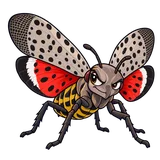
Planthoppers
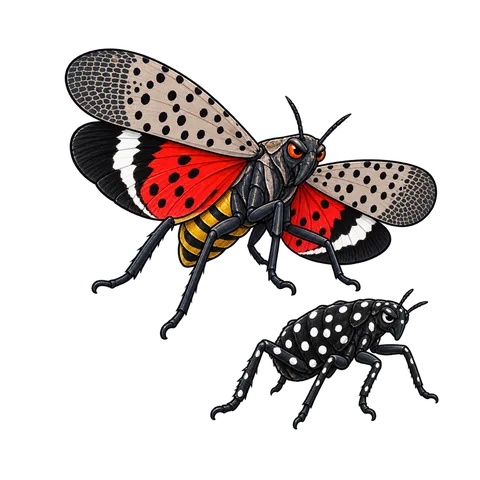
What puts these creatures into one recognizable group is their shared sap-feeding strategy, multi-host dietary range, and powerful legs built for sudden leaping rather than steady walking, driven by piercing mouthparts designed to extract plant phloem. When you walk past an infested tree trunk, these insects spring away in all directions like tiny mechanical toys rather than flying in a sustained, fluttering line. Someone standing in their garden might easily confuse them with small moths because of their roof-like wings, but you can tell planthoppers apart by the way they sit squarely upright on woody stems, lacking the powdery scales of moths or the tiny 3 mm wedge shape of leafhoppers. Unlike spittlebugs that hide inside frothy foam masses or minute psyllids found on garden crops, adult planthoppers in this group measure twenty to twenty-six millimeters long with tan forewings marked by black spots and striking crimson-red hindwings that flash when they jump. You can also distinguish them from treehoppers and plant bugs by their distinct posture, lack of vertical pronotal horns, and the sticky honeydew they leave behind on foliage.